
Keywords: Alzheimer’s Disease, Butyrate, Chlorogenic Acid, Coffee, Gut Microbiome, Microbiota-Gut-Brain Axis, Neuroinflammation, Short-Chain Fatty Acids
Introduction
The global longevity imperative demands that we move beyond the treatment of established disease toward a rigorous science of prevention and healthspan extension. Among the most intriguing candidates for such a role is one of the world’s oldest dietary staples: coffee. With over two billion cups consumed daily across the globe, coffee occupies a unique intersection of cultural ritual and biochemical complexity. Yet while the cardiovascular and metabolic benefits of coffee have attracted substantial scientific scrutiny, a far more profound mechanism has only recently begun to emerge, one that implicates the gut microbiome as the principal mediator of coffee’s effects on the brain [1].
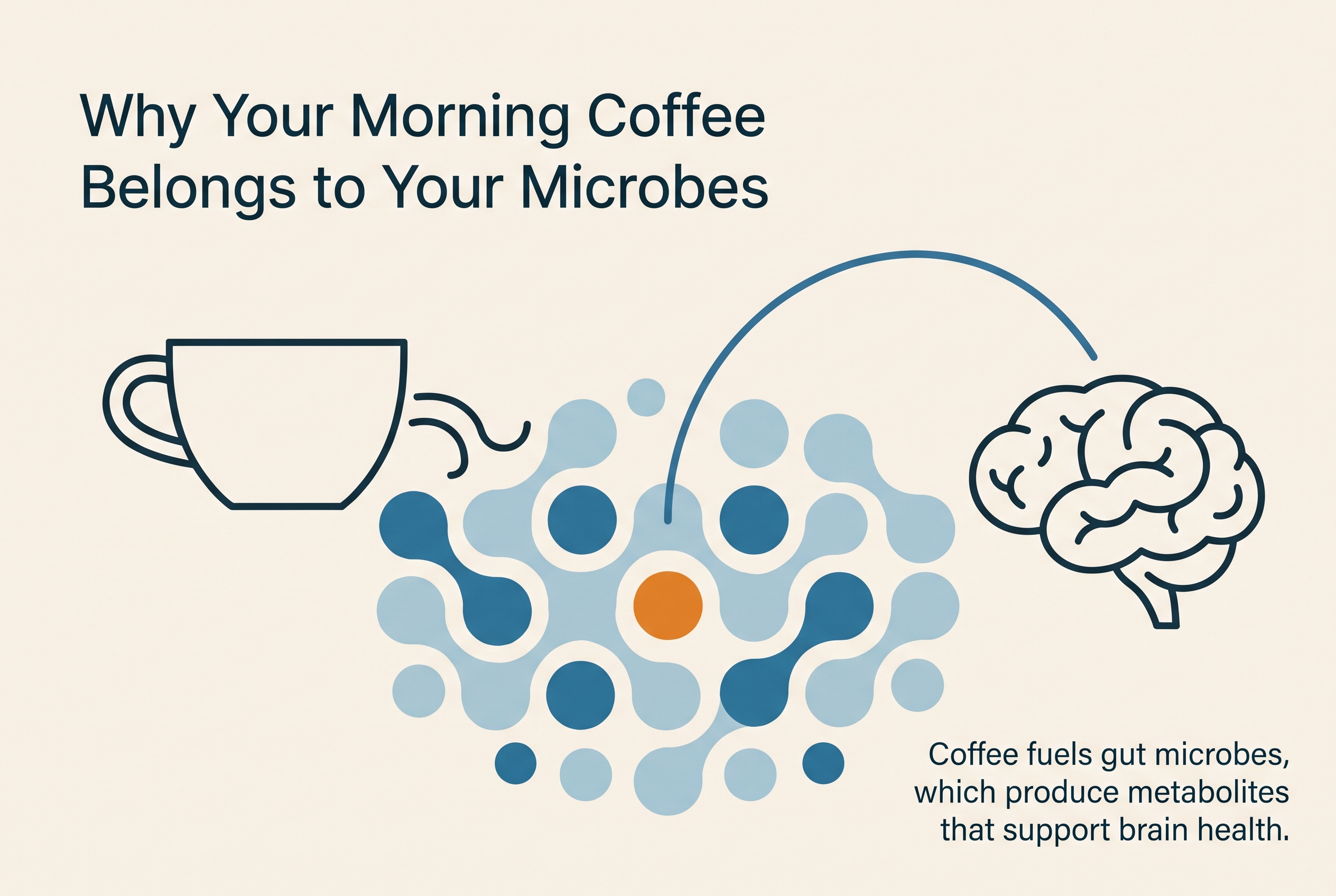
The provocative premise at the heart of this review is deceptively simple: when you drink coffee, you may not be drinking it primarily for yourself. You may be drinking it for the trillions of microorganisms residing in your gastrointestinal tract, microbes whose collective metabolic activity shapes not only your digestion and immune function, but the very architecture and performance of your central nervous system. This is not mere metaphor. Coffee’s major bioactive compounds such as chlorogenic acids, melanoidins, polysaccharides, and diterpenes reach the colon largely intact, where they serve as selective substrates for microbial fermentation, exerting prebiotic-like effects that ripple upward through the gut-brain axis [2,3].
The implications for longevity medicine are substantial. Cognitive decline, neuroinflammation, and metabolic dysregulation, the triumvirate of age-related morbidity, share a common upstream vulnerability: gut dysbiosis. If habitual coffee consumption can meaningfully modulate the microbiome in ways that counteract this vulnerability, it would represent one of the most accessible, widely practiced, and globally scalable preventive interventions available to modern medicine. This review integrates the most current evidence across microbiology, neuroscience, metabolic medicine, and epidemiology to construct a unified mechanistic framework for this hypothesis, while identifying critical gaps that prospective research must address.
We address the following questions: (i) What are the bioactive compounds in coffee, and how do they survive gastrointestinal transit to reach the colonic microbiome? (ii) How does coffee reshape the gut microbial ecosystem, and which taxa are most affected? (iii) Through which molecular and physiological pathways do the coffee-modified microbiome influence brain structure and function? (iv) What is the epidemiological and clinical evidence linking coffee intake to cognitive longevity and metabolic disease prevention? (v) What are the implications for preventive medicine, and what research priorities remain?
The Bioactive Landscape of Coffee: Beyond Caffeine
Coffee is a chemically complex matrix containing over 1,000 identified bioactive compounds, the proportions of which vary substantially by species (Coffea arabica vs. Coffea canephora), roasting degree, grind size, and brewing method. While caffeine, a methylxanthine, garners the most public attention by virtue of its adenosine-receptor antagonism and consequent psychostimulant effects, caffeine constitutes only a fraction of coffee’s biologically active load and, critically, is almost entirely absorbed in the proximal small intestine. It therefore exerts no direct prebiotic influence on the colonic microbiome [4].
The compounds of greatest microbiome relevance are the chlorogenic acids (CGAs), a family of esters formed between hydroxycinnamic acids, predominantly caffeic acid and quinic acid. CGAs represent the most abundant polyphenols in the human diet when coffee is consumed regularly, with a standard 200 mL cup of brewed coffee containing 70–350 mg of CGA. Owing to their structural complexity and the relatively modest absorptive capacity of the small intestine for intact polyphenol esters, a substantial proportion of ingested CGAs, estimated at 67–100% reaches the colon, where they become available to microbial catabolism [5,6].
Melanoidins, high-molecular-weight brown polymers generated through Maillard reactions during roasting, are a second category of quantitatively important colonic substrates. They function analogously to dietary fibre, resisting small-intestinal digestion and supporting fermentative activity in the colon. Coffee polysaccharides, primarily arabinogalactans and galactomannans, similarly escape proximal digestion and constitute additional fermentable substrates. Diterpene, cafestol and kahweol present predominantly in unfiltered coffees such as French press or boiled coffee, possess anti-inflammatory and chemoprotective properties, though they also modulate LDL cholesterol and are largely absent from filtered preparations [4].
This chemical geography has a crucial implication: the health effects of coffee cannot be attributed to caffeine alone, and studies using caffeinated versus decaffeinated coffee as comparators frequently yield comparable results for metabolic and cognitive outcomes, arguing strongly for polyphenol-mediated, microbiome-dependent mechanisms [2,7].
The Gut Microbiome: The Hidden Neural Architect
The human gut harbours an estimated 3.8 × 10³¸ microbial cells, roughly equal to the number of human somatic cells, encoding a collective metagenome approximately 150 times larger than the human genome. This ecosystem, dominated by the phyla Firmicutes, Bacteroidetes, Actinobacteria, and Proteobacteria, is metabolically active to a degree that compels recognition of the microbiome as a virtual endocrine organ. Its outputs include short-chain fatty acids (SCFAs — principally butyrate, propionate, and acetate), neurotransmitters and their precursors (serotonin, dopamine, gamma-aminobutyric acid [GABA]), neuroactive hormones (including glucagon-like peptide-1), immune-modulatory cytokines, and a broad spectrum of secondary metabolites capable of crossing the blood-brain barrier [8,9].
Dysbiosis, the disruption of microbial community structure and function is increasingly recognized as a transdiagnostic pathological condition. Reductions in SCFA-producing taxa (Bifidobacterium, Faecalibacterium prausnitzii, Roseburia intestinalis) and overgrowth of gram-negative lipopolysaccharide (LPS)-rich Proteobacteria are associated with increased intestinal permeability (“leaky gut”), systemic metabolic endotoxemia, chronic low-grade inflammation, and via the gut-brain axis, neuroinflammation, hippocampal atrophy, and accelerated cognitive ageing [8,10].
The concept that the gut microbiome functions as a “hidden neural architect”, silently shaping synaptic density, neurogenesis, glial activation, and neurochemical balance has been transformed from speculative hypothesis to mechanistic reality by two decades of germ-free animal studies, fecal microbiota transplantation experiments, and human observational and interventional research. The question is no longer whether the gut microbiome influences the brain, but rather which specific dietary inputs most powerfully optimize this relationship across the health span. Coffee, as will be argued here, is among the most compelling candidates [9].
Coffee As a Selective Prebiotic: Reshaping the Microbial Ecosystem
The intersection of gut microbiota, metabolic health, and longevity medicine is perhaps most extensively documented in the context of type 2 diabetes mellitus (T2DM) and metabolic syndrome. Gut dysbiosis, particularly reductions in Akkermansia muciniphila and Faecalibacterium prausnitzii is mechanistically implicated in impaired GLP-1 secretion, increased intestinal permeability, and the metabolic endotoxemia that drives insulin resistance. Coffee’s prebiotic effects on these taxa therefore carry metabolic implications that extend well beyond the gut [10,14].
Epidemiological evidence for coffee’s anti-diabetic effects is remarkably consistent across populations. A seminal systematic review by van Dam and Hu encompassing nine prospective cohort studies found that each additional cup of coffee per day was associated with a 7% reduction in T2DM risk, with a dose-response relationship extending to six or more cups per day. A subsequent meta-analysis of 45 prospective studies (totaling 1.2 million participants) confirmed these findings, with moderate coffee consumption (3–4 cups/day) associated with a 25% lower risk of T2DM compared with no consumption. Decaffeinated coffee conferred similar protection, implicating polyphenol-mediated mechanisms including CGA’s capacity to inhibit α-glucosidase and glucose-6-phosphatase, reducing postprandial glucose excursions independently of microbiome effects [2,5,15].
Bhupathiraju and colleagues, analyzing data from three large US cohorts (n = 123,000+), demonstrated that increases in coffee consumption over a four-year period were associated with significantly lower subsequent T2DM risk, with the microbiome-modulating polyphenol fraction hypothesised as the primary driver. Coffee consumption is also associated with reduced risk of non-alcoholic fatty liver disease (NAFLD), a condition intimately linked to gut dysbiosis and hepatic lipopolysaccharide exposure with meta-analyses reporting a 29–39% reduction in risk among habitual consumers [16,17].
From a longevity pharmacology perspective, these metabolic effects are not independent of the neurological mechanisms described above. Insulin resistance in the brain, a state increasingly termed “Type 3 diabetes” in the Alzheimer’s disease literature, impairs synaptic plasticity, promotes tau hyperphosphorylation, and accelerates amyloid aggregation. By improving peripheral and hepatic insulin sensitivity through microbiome-dependent and independent mechanisms, coffee may simultaneously reduce both metabolic and neurodegenerative risk, positioning it as a dual-target preventive agent of considerable clinical relevance [13].
The Gut-Brain Axis: Molecular Highways from Microbiome to Mind
The gut-brain axis (GBA) is a bidirectional signaling network integrating neural, endocrine, immune, and metabolic channels between the enteric nervous system and the central nervous system. Its anatomical backbone is the vagus nerve, which directly innervates the gut wall and transmits afferent signals encoding information about luminal chemistry, microbial metabolites, and intestinal immune activity to brainstem nuclei with projections to the hypothalamus, limbic system, and prefrontal cortex. Crucially, approximately 80–90% of vagal fibres are afferent, carrying information from gut to brain, confirming the gut’s role as the dominant sensory organ in this circuit [9].
Short-chain fatty acids, particularly butyrate, occupy a central mechanistic role in the microbiome’s influence on the brain. As the primary energy substrate for colonocytes, butyrate maintains intestinal barrier integrity and suppresses mucosal inflammatory signaling. Systemically, butyrate crosses the blood-brain barrier, where it acts as a histone deacetylase (HDAC) inhibitor, favoring a chromatin state permissive of neuroprotective gene expression, including brain-derived neurotrophic factor (BDNF), a growth factor essential for synaptic plasticity and hippocampal neurogenesis. Reduced BDNF expression is one of the earliest neurobiological signatures of Alzheimer’s disease and major depressive disorder, making butyrate-driven BDNF upregulation an intriguing mechanistic bridge between microbiome composition and cognitive trajectory [9,12].
Approximately 90% of the body’s serotonin is synthesized in the gut by enterochromaffin cells, a process regulated in part by microbial metabolites. GABA, the principal inhibitory neurotransmitter, is produced in abundance by Lactobacillus and Bifidobacterium species, precisely the taxa enriched by coffee polyphenols. Microbiome-derived tryptophan catabolites modulate the kynurenine pathway, determining whether tryptophan is channeled toward serotonin (neuroprotective) or quinolinic acid (excitotoxic and pro-inflammatory). Coffee’s capacity to shift this balance, via its prebiotic action on tryptophan-metabolising taxa represents a potentially significant mechanism by which it may mitigate neuroinflammation and protect against depressive and neurodegenerative phenotypes [9].
The intestinal immune interface further mediates GBA signaling. Gut dysbiosis increases mucosal permeability, facilitating systemic translocation of LPS, the gram-negative bacterial cell wall component that activates toll-like receptor 4 (TLR4) on peripheral immune cells, generating a systemic inflammatory response that can propagate to the central nervous system via cytokine-driven neuroinflammation. Coffee polyphenols and their microbial metabolites attenuate TLR4 signaling and reduce circulating LPS-binding protein, providing a mechanistic basis for coffee’s anti-inflammatory profile observed in multiple biomarker studies [5,10].
Neuroinflammation, Microbiota Dysbiosis, and Cognitive Ageing
Neuroinflammation, characterized by microglial activation, astrocyte reactivity, and elevated CNS concentrations of IL-1β, TNF-α, and IL-6 is now recognized as a core pathological feature of Alzheimer’s disease, Parkinson’s disease, vascular dementia, and age-related cognitive decline, rather than a secondary epiphenomenon. Critically, chronic systemic low-grade inflammation itself frequently perpetuated by gut dysbiosis and metabolic endotoxemia, functions as a major driver of neuroinflammatory priming, establishing a pathogenic continuum from dysbiotic gut to inflamed brain [9,10,13].
Animal studies provide compelling mechanistic evidence for the coffee-microbiome-neuroinflammation triad. In murine models of Alzheimer’s disease, administration of chlorogenic acid significantly reduced hippocampal amyloid-β deposition, attenuated microglial activation, and preserved spatial memory, effects accompanied by measurable shifts in gut microbial composition. Caffeic acid, a principal CGA metabolite generated through microbial fermentation, demonstrated potent inhibition of NF-κB, the master transcriptional regulator of neuroinflammatory cytokine production in LPS-stimulated murine microglial cells [5,13].
In humans, a large cross-sectional analysis nested within the Three City Study (n = 7,017) found that caffeine consumption was significantly and inversely associated with cognitive decline in women, with higher consumers showing markedly reduced rates of Alzheimer’s-type dementia over a four-year follow-up. While this study focused on caffeine, subsequent analyses of decaffeinated coffee consumers suggest that caffeine-independent mechanisms, plausibly including microbiome modulation, contribute substantially to the observed neuroprotection. The Population-based CAIDE study further demonstrated that moderate coffee consumption in midlife was associated with a 65% decrease in the risk of late-life dementia and Alzheimer’s disease, a magnitude of effect that exceeds that of most pharmacological interventions in prevention trials [2,7,13].
The neuroimmunological mechanism proposed here converges on the following pathway: coffee polyphenols enrich butyrate-producing and anti-inflammatory microbial taxa → elevated luminal butyrate reinforces intestinal barrier integrity and suppresses LPS translocation → reduced systemic LPS decreases peripheral TLR4 activation and circulating pro-inflammatory cytokines → attenuated neuroinflammatory priming preserves microglial homeostasis and synaptic integrity → improved cognitive function and reduced neurodegenerative risk. This cascade, while requiring definitive confirmation in prospective human trials with integrated multi-omic endpoints, is mechanistically coherent and empirically supported at each step.
Coffee, Microbiome Modulation, and Metabolic Disease Prevention
The intersection of gut microbiota, metabolic health, and longevity medicine is perhaps most extensively documented in the context of type 2 diabetes mellitus (T2DM) and metabolic syndrome. Gut dysbiosis, particularly reductions in Akkermansia muciniphila and Faecalibacterium prausnitzii is mechanistically implicated in impaired GLP-1 secretion, increased intestinal permeability, and the metabolic endotoxemia that drives insulin resistance. Coffee’s prebiotic effects on these taxa therefore carry metabolic implications that extend well beyond the gut [10,14].
Epidemiological evidence for coffee’s anti-diabetic effects is remarkably consistent across populations. A seminal systematic review by van Dam and Hu encompassing nine prospective cohort studies found that each additional cup of coffee per day was associated with a 7% reduction in T2DM risk, with a dose-response relationship extending to six or more cups per day. A subsequent meta-analysis of 45 prospective studies (totaling 1.2 million participants) confirmed these findings, with moderate coffee consumption (3–4 cups/day) associated with a 25% lower risk of T2DM compared with no consumption. Decaffeinated coffee conferred similar protection, implicating polyphenol-mediated mechanisms including CGA’s capacity to inhibit α-glucosidase and glucose-6-phosphatase, reducing postprandial glucose excursions independently of microbiome effects [2,5,15].
Bhupathiraju and colleagues, analyzing data from three large US cohorts (n = 123,000+), demonstrated that increases in coffee consumption over a four-year period were associated with significantly lower subsequent T2DM risk, with the microbiome-modulating polyphenol fraction hypothesized as the primary driver. Coffee consumption is also associated with reduced risk of non-alcoholic fatty liver disease (NAFLD), a condition intimately linked to gut dysbiosis and hepatic lipopolysaccharide exposure with meta-analyses reporting a 29–39% reduction in risk among habitual consumers [16,17].
From a longevity pharmacology perspective, these metabolic effects are not independent of the neurological mechanisms described above. Insulin resistance in the brain, a state increasingly termed “Type 3 diabetes” in the Alzheimer’s disease literature impairs synaptic plasticity, promotes tau hyperphosphorylation, and accelerates amyloid aggregation. By improving peripheral and hepatic insulin sensitivity through microbiome-dependent and independent mechanisms, coffee may simultaneously reduce both metabolic and neurodegenerative risk, positioning it as a dual-target preventive agent of considerable clinical relevance [13].
Epidemiological Evidence: Coffee Consumption and Longevity Outcomes
The epidemiological evidence base for coffee’s association with longevity is substantial, consistent, and by the standards of nutritional epidemiology, unusually robust. Freedman and colleagues, in a landmark analysis of the NIH-AARP Diet and Health Study cohort (n = 229,119 men and 173,141 women), reported significant inverse associations between coffee consumption and all-cause mortality, with six or more cups per day associated with a 10–15% reduction in mortality risk after multivariable adjustment. Inverse associations were observed for deaths attributed to heart disease, respiratory disease, stroke, diabetes, and infections, a breadth of effect consistent with a systemic, microbiome-mediated anti-inflammatory mechanism [3].
An umbrella review by Poole and colleagues synthesizing 201 meta-analyses encompassing over 67 million person-years of follow-up concluded that coffee consumption was more often associated with benefit than harm, with the largest risk reductions observed for liver disease (cirrhosis: OR 0.61, 95% CI 0.50–0.73), T2DM (RR 0.71, 95% CI 0.67–0.76), and neurodegenerative diseases, including Parkinson’s disease and Alzheimer’s disease. The authors concluded that three to four cups of coffee per day was the exposure level associated with the largest risk reduction across most outcomes examined [2].
A dose-response meta-analysis by Ding and colleagues of 36 cohort studies found that coffee consumption was inversely associated with cardiovascular disease risk, with maximum benefit at 3.5 cups/day (RR 0.85, 95% CI 0.80–0.90 vs. non-drinkers). For cognitive outcomes, a meta-analysis of 11 prospective cohort studies by Liu and colleagues found that higher coffee consumption was associated with a significantly lower risk of cognitive decline and Alzheimer’s disease, with a pooled relative risk of 0.73 (95% CI 0.58–0.92) for the highest vs. lowest consumption categories [18,19].
It is imperative to note the inherent limitations of observational data in establishing causality: residual confounding, reverse causation (ill individuals reducing coffee intake), self-reported dietary assessment, and heterogeneous outcome definitions require interpretive caution. Nonetheless, the biological plausibility and mechanistic specificity provided by the gut-brain axis framework substantially strengthen the inferential basis for a causal interpretation of these associations.
Clinical and Mechanistic Implications for Longevity Medicine
The synthesis of mechanistic and epidemiological evidence presented here supports a framework in which coffee functions as a behaviorally accessible, low-cost prebiotic-neuroprotective agent, one that warrants formal integration into precision longevity medicine protocols. From a clinical translation standpoint, several practical considerations and research priorities emerge.
First, dose and preparation matter. The optimal cognitive and metabolic effects appear to cluster around 3–5 cups of filtered coffee per day. Unfiltered preparations (French press, espresso, Moka pot) retain diterpenes that may adversely affect LDL cholesterol in susceptible individuals, though their higher polyphenol concentration may also confer greater microbiome benefits. Decaffeinated coffee preserves the majority of prebiotic polyphenol activity and is appropriate for individuals with caffeine sensitivity, cardiovascular contraindications, or sleep disturbance [2,4,7].
Second, individual microbiome composition likely determines the magnitude of benefit derived from coffee consumption. Individuals with higher baseline Bifidobacterium and Lactobacillus abundance may mount more robust SCFA responses to coffee polyphenols, while those with severe dysbiosis may require microbiome restoration (through dietary diversification, probiotic supplementation, or in emerging practice, targeted prebiotic intervention) before coffee’s prebiotic effects can be optimized [11,14].
Third, the psychobiotic principle, the idea that microbiome-targeted interventions can modulate brain function and mental health, suggests that coffee’s neurological effects may be partially additive to those of fermented foods, prebiotic fibre supplementation, and other polyphenol-rich dietary components. A comprehensive longevity diet that co-optimises multiple microbiome inputs is likely to yield synergistic benefits that no single food or supplement can achieve in isolation [8,9,20].
Fourth, the timing of coffee consumption relative to meals, sleep, and circadian rhythms may modulate its microbiome effects. Circadian misalignment, increasingly prevalent in contemporary society itself drives gut dysbiosis, and emerging evidence suggests that morning coffee consumption may reinforce circadian microbiome rhythmicity in ways that afternoon or evening intake does not [9].
From a research design perspective, the field urgently requires randomized controlled trials combining stool metagenomic sequencing, plasma metabolomics, neuroimaging (hippocampal volume, white matter integrity), cognitive battery assessment, and inflammatory biomarker panels in populations stratified by baseline microbiome composition. Such trials would allow mechanistic confirmation of the coffee-microbiome-brain axis and enable personalized dosing recommendations grounded in individual biological data.
Conclusion
The evidence reviewed here converges on a striking and clinically important conclusion: the health benefits of coffee, long attributed principally to caffeine’s adenosine antagonism or to loosely defined antioxidant properties are substantially mediated by the gut microbiome. Coffee’s major bioactive polyphenols function as selective substrates for colonic microbial fermentation, enriching beneficial taxa, suppressing dysbiotic communities, and generating bioactive metabolites that traverse the gut-brain axis to modulate neuroinflammation, neurotrophic signaling, and synaptic plasticity. In doing so, the microbiome-altered by your daily cup transforms coffee into something far more sophisticated than a stimulant: it becomes a prebiotic delivery system for neuroprotective compounds synthesized by the very organisms whose governance of the brain we are only beginning to appreciate.
For longevity medicine, a discipline committed to compressing morbidity, extending cognitive health span, and preventing the metabolic diseases that accelerate ageing, this represents a major opportunity. Coffee is already consumed at scale. Its microbiome effects are mechanistically plausible, epidemiologically consistent, and pharmacologically meaningful. The outstanding task is to move from associational inference to mechanistic certainty through rigorous multi-omic interventional research, and to translate that certainty into personalized, microbiome-informed guidance. When that work is complete, we may find that the microbes running our brains have been leveraging our coffee habit to their and our enduring advantage.
Reference
1. International Coffee Organization. Coffee Report & Outlook 2023. London: ICO; 2023.
2. Poole R, Kennedy OJ, Roderick P, Fallowfield JA, Hayes PC, Parkes J. Coffee consumption and health: umbrella review of meta-analyses of multiple health outcomes. BMJ. 2017;359:j5024.
3. Freedman ND, Park Y, Abnet CC, Hollenbeck AR, Sinha R. Association of coffee drinking with total and cause-specific mortality. N Engl J Med. 2012;366(20):1891–904.
4. de Melo Pereira GV, de Carvalho Neto DP, Magalhães Júnior AI, do Prado FG, Pagnoncelli MGB, Karp SG, et al. Chemical composition and health properties of coffee and coffee by-products. Adv Food Nutr Res. 2020;91:65–96.
5. Scalbert A, Manach C, Morand C, Rémésy C, Jiménez L. Dietary polyphenols and the prevention of diseases. Crit Rev Food Sci Nutr. 2005;45(4):287–306.
6. Mills CE, Tzounis X, Quested M, Vella M, Barone Lumaga R, Carrao-Rosa S, et al. In vitro colonic metabolism of coffee and chlorogenic acid results in selective changes in human faecal microbiota growth. Br J Nutr. 2015;113(8):1220–7.
7. Ritchie K, Carrière I, de Mendonca A, Portet F, Dartigues JF, Rouaud O, et al. The neuroprotective effects of caffeine: a prospective population study (the Three City Study). Neurology. 2007;69(6):536–45.
8. Sender R, Fuchs S, Milo R. Revised estimates for the number of human and bacteria cells in the body. Cell. 2016;164(3):337–40.
9. Cryan JF, O’Riordan KJ, Cowan CSM, Sandhu KV, Bastiaanssen TFS, Boehme M, et al. The microbiota-gut-brain axis. Physiol Rev. 2019;99(4):1877–2013.
10. Cani PD, Amar J, Iglesias MA, Poggi M, Knauf C, Bastelica D, et al. Metabolic endotoxemia initiates obesity and insulin resistance. Diabetes. 2007;56(7):1761–72.
11. Sonnenburg JL, Bäckhed F. Diet-microbiota interactions as moderators of human metabolism. Nature. 2016;535(7610):56–64.
12. Stilling RM, van de Wouw M, Clarke G, Stanton C, Dinan TG, Cryan JF. The neuropharmacology of butyrate: the bread and butter of the microbiota-gut-brain axis? Neurochem Int. 2016;99:110–32.
13. Eskelinen MH, Ngandu T, Tuomilehto J, Soininen H, Kivipelto M. Midlife coffee and tea drinking and the risk of late-life dementia: a population-based CAIDE study. J Alzheimers Dis. 2009;16(1):85–91.
14. Turnbaugh PJ, Ley RE, Mahowald MA, Magrini V, Mardis ER, Gordon JI. An obesity-associated gut microbiome with increased capacity for energy harvest. Nature. 2006;444(7122):1027–31.
15. van Dam RM, Hu FB. Coffee consumption and risk of type 2 diabetes: a systematic review. JAMA. 2005;294(1):97–104.
16. Bhupathiraju SN, Pan A, Manson JE, Willett WC, van Dam RM, Hu FB. Changes in coffee intake and subsequent risk of type 2 diabetes: three large cohorts of US men and women. Diabetologia. 2014;57(7):1346–54.
17. Kennedy OJ, Roderick P, Buchanan R, Fallowfield JA, Hayes PC, Parkes J. Coffee, caffeine and non-alcoholic fatty liver disease. Aliment Pharmacol Ther. 2016;44(8):780–91.
18. Ding M, Bhupathiraju SN, Satija A, van Dam RM, Hu FB. Long-term coffee consumption and risk of cardiovascular disease: a systematic review and a dose-response meta-analysis of prospective cohort studies. Circulation. 2014;129(6):643–59.
19. Liu QP, Wu YF, Cheng HY, Xia T, Ding H, Wang H, et al. Habitual coffee consumption and risk of cognitive decline/dementia: a systematic review and meta-analysis of prospective cohort studies. Nutrition. 2016;32(6):628–36.
20. Dinan TG, Stanton C, Cryan JF. Psychobiotics: a novel class of psychotropic. Biol Psychiatry. 2013;74(10):720–6.
21. Huxley R, Lee CM, Barzi F, Timmermeister L, Czernichow S, Perkovic V, et al. Coffee, decaffeinated coffee, and tea consumption in relation to incident type 2 diabetes mellitus: a systematic review with meta-analysis. Arch Intern Med. 2009;169(22):2053–63.
22. Lopez-Garcia E, van Dam RM, Li TY, Rodriguez-Artalejo F, Hu FB. The relationship of coffee consumption with mortality. Ann Intern Med. 2008;148(12):904–14.
23. Koppel N, Maini Rekdal V, Balskus EP. Chemical transformation of xenobiotics by the human gut microbiota. Science. 2017;356(6344):eaag2770.
24. Guarner F, Malagelada JR. Gut flora in health and disease. Lancet. 2003;361(9356):512–9.
25. Moco S, Martin FP, Rezzi S. Metabolomics view on gut microbiome modulation by polyphenol-rich foods. J Proteome Res. 2012;11(10):4781–90.