
Recent Articles
-
The Risk a Zero Calcium Score Cannot See
Lp(a) and CAC provide independent, additive prognostic information, and a favorable calcium score should refine, not override, the intensity of management.
-

The PCSK9 Inhibitor That Finally Fits in a Pill Bottle
Its significance lies less in a new mechanism than in a new delivery paradigm that could meaningfully expand access to potent LDL-C lowering.
-
The Peptide That Follows Inflammation Into the Gut
A druggable, inflammation-seeking transporter system operating at the gut barrier is worth continued attention regardless of what happens to KPV specifically.
-

The Immune Signals That Shape Mood and Memory
The immune-brain interface represents a critical regulatory nexus at the intersection of physical and mental health.
-
When a Safe Supplement Stops Being Safe for the Longevity Patient
Modifiable metabolic factors, including over-the-counter supplements long considered safe, may carry unrecognized neurological risk.
-
When Dense Bones Break and the Scan Says Nothing
In T2DM, higher BMD and higher fracture risk can and do coexist. This paradox is a consequence of biology current frameworks fail to capture.
-

Two Minerals That Quiet the Stress Axis and Give Back the Night
An 8-week Mg+K protocol in diabetic insomniacs achieved approximately 45% cortisol reduction, 151% melatonin restoration, and complete elimination of severe insomnia.
-

How Stress Teaches the Body to Age Faster
Chronic stress does not simply make people feel unwell, it physically alters the architecture of the genome and shortens the molecular clocks embedded in every cell.
-
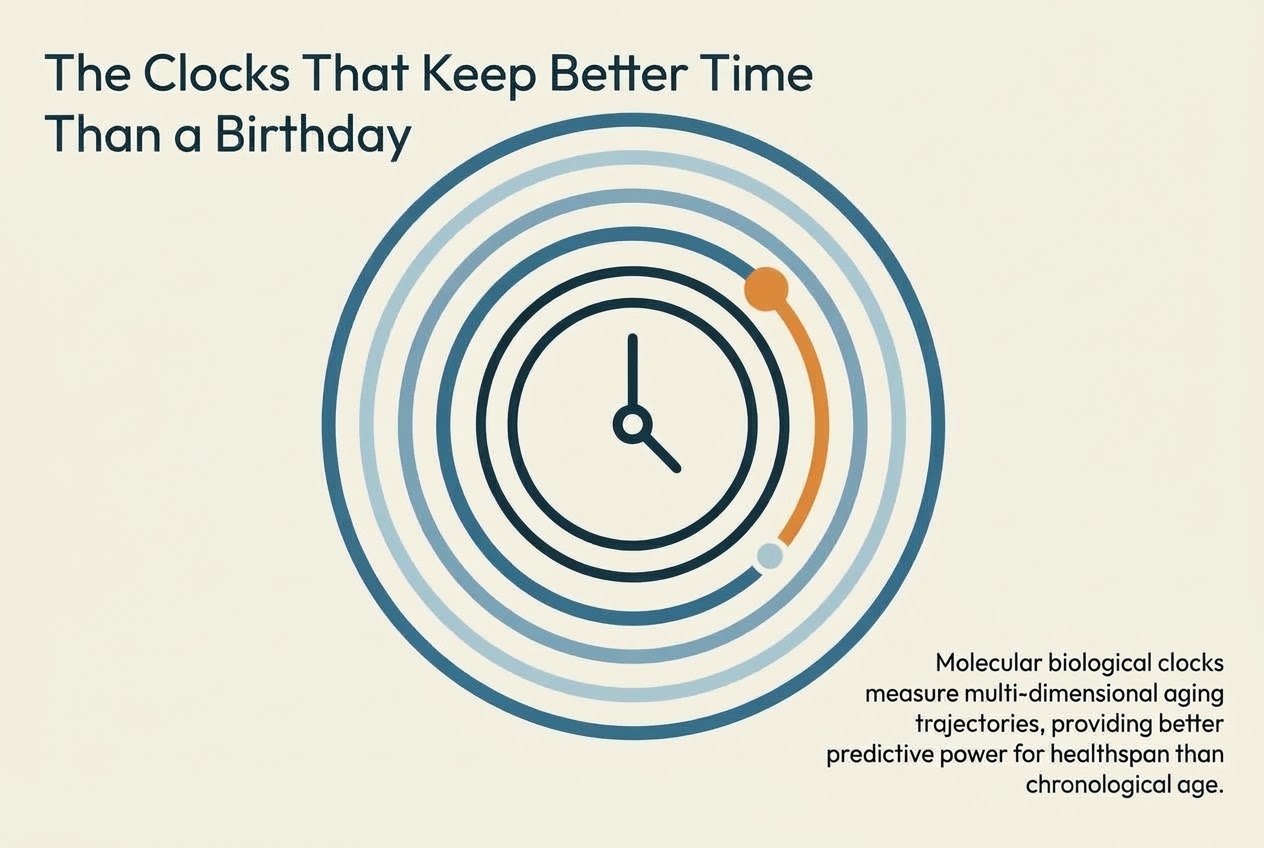
The Clocks That Keep Better Time Than a Birthday
The era of measuring longevity through a single number, chronological age, is giving way to a multi-dimensional, molecularly grounded understanding of biological aging.