
Keywords: Cafestol, Chlorogenic Acid, Coffee, Coffee Brewing Methods, Gut Microbiome, LDL Cholesterol, Longevity, Type 2 Diabetes
Introduction
Coffee is the second most traded commodity in the world and is consumed by an estimated 2.25 billion people daily. Far from being a simple stimulant, the brewed beverage is a pharmacologically complex matrix of over 1,000 identified phytochemicals, each with distinct biological activities. The composition of a cup of coffee is shaped not only by the botanical species (Coffea arabica or Coffea canephora), roast degree, and bean origin, but critically, by the method of preparation used to extract these compounds into solution [1,2,3,4].
In clinical and public health contexts, the relationship between coffee and disease risk has been a subject of intensive investigation for decades. Once viewed with suspicion, coffee consumption is now associated with a range of favourable health outcomes, including reduced incidence of type 2 diabetes mellitus (T2DM), cardiovascular disease (CVD), non-alcoholic fatty liver disease (NAFLD), neurodegenerative disorders, and certain cancers. However, this protective profile is not uniform across all preparation methods. Landmark research from Scandinavia demonstrated that long-term consumption of unfiltered boiled coffee significantly raised serum low-density lipoprotein (LDL) cholesterol, an effect attributable to diterpene lipids largely absent in paper-filtered preparations [5,6,7,8].
For practitioners in the fields of metabolic medicine, preventive health, and longevity science, understanding how the brewing vessel translates into biochemical and clinical outcomes is of direct practical relevance. This review examines the major brewing methods in common use like espresso, French press, pour-over paper filter, Moka pot, and cold brew and evaluates their differential impact on the delivery of key bioactive compounds. It further explores the mechanistic pathways through which these compounds influence metabolic health, cardiovascular function, gut microbiota, and longevity markers, integrating the most current evidence from peer-reviewed literature [9,10].
The Bioactive Architecture of Coffee
The health-relevant chemistry of coffee can be organised around five principal compound classes: chlorogenic acids, caffeine, diterpenes, trigonelline, and melanoidins. Each interacts differently with human physiology, and their extraction efficiency varies substantially with brewing parameters including water temperature, contact time, pressure, grind size, and the presence or absence of filtration [3,11].
Chlorogenic Acids (CGAs)
Chlorogenic acids are a family of hydroxycinnamic acid esters, of which 5-O-caffeoylquinic acid (5-CGA) is the most abundant in coffee. They account for 6–12% of the dry weight of roasted coffee beans and represent the primary polyphenolic contributors to coffee’s antioxidant capacity.12,13 CGAs activate the Nrf2/ARE (nuclear factor erythroid 2-related factor 2/antioxidant response element) pathway, upregulating endogenous antioxidant enzymes including superoxide dismutase and glutathione peroxidase, while simultaneously suppressing NF-κB-mediated inflammatory signalling. These dual antioxidant-anti-inflammatory actions are directly relevant to the pathogenesis of metabolic syndrome and T2DM, both of which are characterised by chronic low-grade inflammation and elevated oxidative stress [14,15].
Caffeine
Caffeine (1,3,7-trimethylxanthine) is the most pharmacologically active compound in coffee and the world’s most widely consumed psychoactive substance. It acts primarily as an adenosine receptor antagonist (A1 and A2A subtypes), producing central nervous system stimulation, enhanced lipolysis via phosphodiesterase inhibition, and acute increases in heart rate and blood pressure.3 Despite transient vasopressor effects, habitual caffeine consumption is associated with tolerance and no sustained elevation in blood pressure in most individuals. Caffeine also enhances thermogenesis, stimulates hepatic glycogenolysis, and increases fatty acid oxidation, contributing to metabolic rate elevation and potential insulin-sensitising effects in the long term [16].
Diterpenes: Cafestol and Kahweol
Cafestol and kahweol are pentacyclic diterpene alcohols found in the lipid fraction of coffee beans. They are quantitatively the most potent dietary cholesterol-raising compounds known, capable of increasing serum total cholesterol by approximately 0.13 mmol/L for every 10 mg of cafestol consumed per day. Their mechanism involves downregulation of cholesterol 7α-hydroxylase (CYP7A1), the rate-limiting enzyme in bile acid synthesis, resulting in reduced bile acid production and compensatory upregulation of hepatic LDL receptor expression, paradoxically resulting in increased LDL synthesis rather than clearance. However, cafestol also demonstrates anti-carcinogenic, anti-inflammatory, and hepatoprotective properties at physiological concentrations, illustrating that its clinical net effect depends heavily on dose and systemic context [7,8,17,18].
Trigonelline and Melanoidins
Trigonelline (N-methyl nicotinic acid) is an alkaloid precursor that partially degrades to nicotinic acid (niacin) and pyridines during roasting, contributing to coffee’s flavour and pharmacological profile. It has demonstrated blood glucose-lowering activity in animal models through inhibition of glucokinase and suppression of hepatic glucose production. Melanoidins are high-molecular-weight brown polymers formed during Maillard reactions in roasting. They function as dietary fibre analogues, exhibiting prebiotic activity, antioxidant properties, and antimicrobial effects against pathogenic gut bacteria [3,11,19].
Coffee Brewing Methods: A Comparative Overview
Brewing method is the most influential post-harvest variable determining the final chemical composition of a coffee beverage.1, Variations in extraction temperature, pressure, contact time, grind particle size, and filtration media produce beverages with markedly different bioactive profiles. Table 1 summarises the estimated concentrations of key compounds across the major brewing methods [1,3].
| Brewing Method | Cafestol & Kahweol | Chlorogenic Acids | Caffeine (mg/cup) | Filter Type |
| Espresso | Moderate (12-20 mg/L) | High | 60-80 | None/crema |
| French Press (boiled) | Very high (≥900 mg/L) | Moderate | 80-100 | Metal mesh |
| Pour-over (paper) | Very low (<15 mg/L) | High | 80-120 | Paper |
| Moka pot | Moderate | Moderate-High | 100-130 | Metal |
| Cold brew | Low | Moderate (variable) | 100-200 | None/coarse |
Table 1. Comparative bioactive compound profiles across major coffee brewing methods (approximate values per serving)
Espresso
Espresso is prepared by forcing pressurised hot water (90–96 °C, 9 bar) through a compact puck of finely ground coffee over approximately 25–30 seconds. The high pressure and fine grind maximise extraction of water-soluble compounds while producing a concentrated beverage with a characteristic crema, an emulsion of oils, carbon dioxide, and surfactants.1 Espresso contains moderate levels of cafestol and kahweol (lower than unfiltered methods but substantially higher than paper-filtered drip) as the absence of a paper filter permits partial diterpene extraction. Caffeine content per shot (approximately 60–80 mg) is lower than a standard cup of filtered coffee due to the small serving volume, though mg/100 mL concentration is among the highest of all methods [3,11].
French Press and Boiled (Unfiltered) Coffee
Immersion methods, including French press (cafetière) and the traditional Scandinavian boiled coffee (kokekaffe) involve prolonged contact between coarse-ground coffee and hot water, separated only by a coarse metal mesh. This metal filtration is essentially ineffective at removing the lipid-soluble diterpenes, resulting in cafestol concentrations exceeding 900 mg/L, nearly 80-fold higher than paper-filtered drip. A landmark large-scale Norwegian cohort study (the Tromsø Study) demonstrated that prolonged consumption of boiled coffee was associated with significantly elevated serum total and LDL cholesterol compared to filtered coffee consumers, translating into quantifiable cardiovascular risk. Despite this lipid-raising concern, unfiltered coffee retains high concentrations of antioxidant polyphenols and melanoidins, and consumption patterns should be evaluated in the context of overall dietary fat and lipid profiles [7,8,11,18].
Pour-Over and Paper-Filtered Drip Coffee
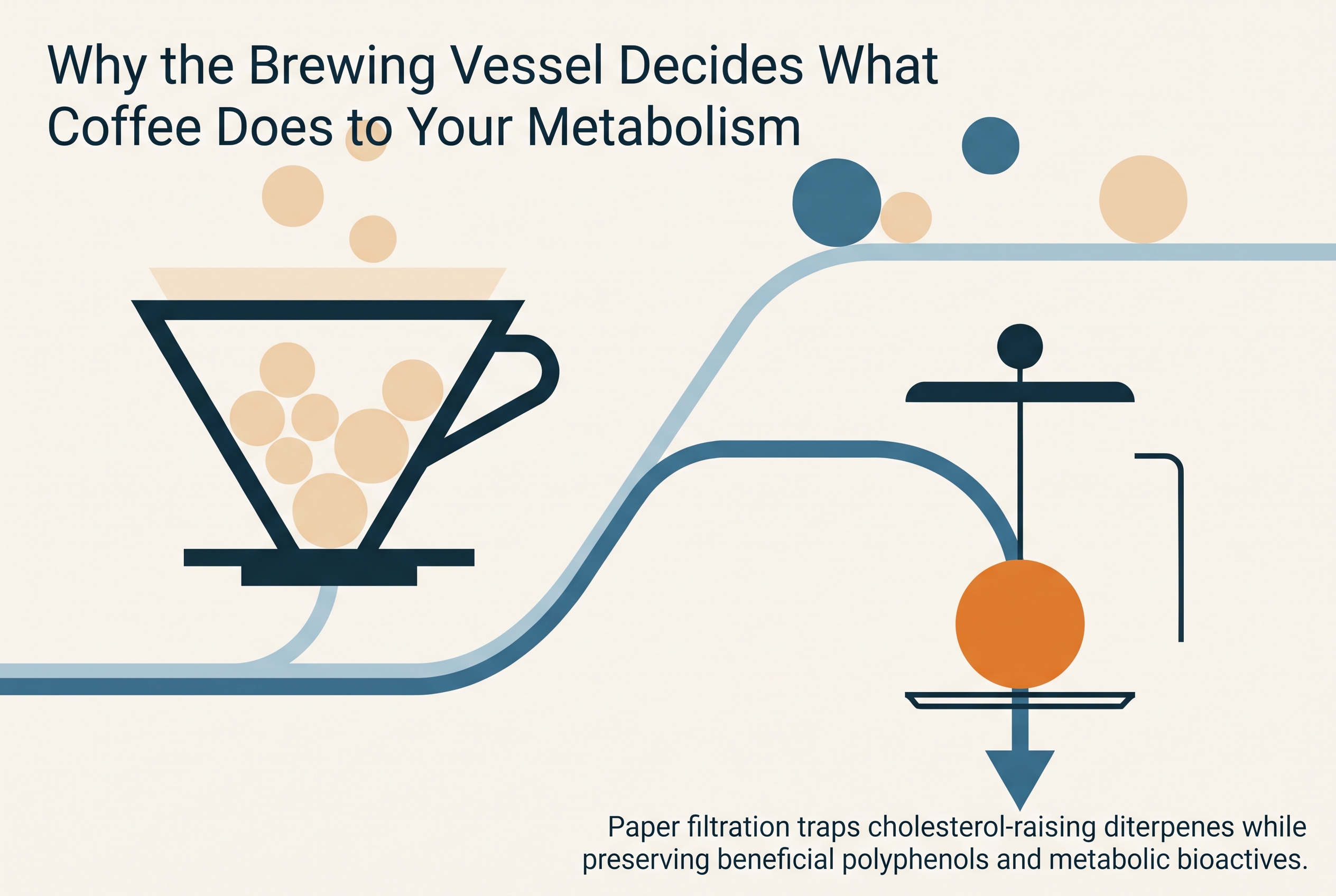
Paper-filtered brewing methods (including Chemex, V60, Kalita Wave, and automatic drip machines) pass hot water through a paper or cloth filter, which physically adsorbs the vast majority of coffee oils and diterpenes. Paper-filtered coffee contains cafestol concentrations typically below 15 mg/L. This method preserves high levels of CGAs and caffeine while substantially eliminating the LDL-raising diterpenes, making it the preferred preparation method from a cardiovascular risk standpoint for individuals with dyslipidaemia or elevated cardiovascular risk. The longer brew time (3–5 minutes) at moderate temperature (90–96 °C) generally yields superior extraction of hydrophilic polyphenols compared to espresso [1,6,7,8,18].
Cold Brew
Cold brew is produced by steeping coarsely ground coffee in cold or room-temperature water for 12–24 hours, followed by filtration. The absence of heat fundamentally alters the extraction chemistry: cold brew exhibits lower titratable acidity, reduced concentrations of thermally generated compounds such as certain quinolactones and furans, and variable CGA extraction dependent on grind size and steep time. Hot-brewed preparations consistently demonstrate higher total antioxidant activity (DPPH and ABTS assays) and higher total phenolic content than cold brew counterparts when roasted beans are used, as heat is required for efficient polyphenol solubilisation.20 However, cold brew prepared from medium-to-coarse grinds can yield comparatively high caffeine concentrations (100–200 mg/240 mL serving), which is clinically relevant for individuals sensitive to caffeine or managing conditions affected by adrenergic stimulation. The lower acidity makes it better tolerated in individuals with gastro-oesophageal reflux disease (GORD) [20,21].
Cardiovascular Health: The Filter Makes the Difference
The cardiovascular effects of coffee are among the most extensively studied of any dietary component. Early epidemiological concern regarding coffee’s effects on coronary heart disease was largely attributable to unfiltered brewing practices prevalent in Northern European populations. Urgert and Katan’s seminal mechanistic work established that cafestol is the primary bioactive agent responsible, with kahweol providing a modest additional effect. Controlled intervention studies demonstrated that each 10 mg daily increment in cafestol intake raises total serum cholesterol by approximately 0.13 mmol/L, with VLDL and LDL fractions most affected; HDL cholesterol shows a mild reduction [7,8].
A particularly important real-world implication emerges from workplace consumption patterns. Nguyen et al. (2025) reported that machine-brewed workplace coffees, including many capsule and bean-to-cup systems can contain intermediate cafestol concentrations depending on filtration design, representing an overlooked cardiovascular risk factor for populations who consume the majority of their coffee at work. This finding underscores the need for health professionals to assess brewing method , not merely quantity when counselling patients on coffee consumption [18].
Beyond lipid effects, large cohort data consistently demonstrate a net cardioprotective effect of moderate coffee consumption. Analysis of 500,000 UK Biobank participants found that habitual coffee consumption of 2–3 cups per day was associated with the greatest reductions in incident arrhythmia, coronary heart disease, heart failure, and CVD-related mortality. An umbrella review of meta-analyses (2024) concluded that coffee consumption is associated with reduced risks of stroke, coronary artery disease, and cardiovascular mortality across diverse global populations, with optimal benefit at 3–5 cups per day. The non-diterpene bioactives in coffee, primarily CGAs and melanoidins are likely responsible for these protective effects through endothelial protection, improvement of insulin signalling, and reduction of systemic inflammation [5,22,23].
Metabolic Disease Prevention: Coffee, Insulin Sensitivity, and Glycaemic Control
The inverse association between habitual coffee consumption and T2DM risk is one of the most robustly replicated findings in nutritional epidemiology. A dose-response meta-analysis of 28 prospective cohort studies encompassing over 1 million participants demonstrated that each additional cup of coffee per day was associated with a 6% reduction in T2DM risk (RR = 0.94, 95% CI 0.93–0.95), with comparable effects for both caffeinated and decaffeinated preparations. This finding indicates that caffeine itself is not the primary mediator, directing attention toward CGAs and other thermostable polyphenols as the mechanistically relevant agents [5,19].
Chlorogenic acids modulate glucose metabolism through multiple complementary pathways: inhibition of intestinal sodium-dependent glucose transporter 1 (SGLT1) and glucose transporter 2 (GLUT2), reducing post-prandial glucose absorption; activation of AMP-activated protein kinase (AMPK) in skeletal muscle and liver, enhancing insulin sensitivity; and suppression of hepatic gluconeogenesis through inhibition of glucose-6-phosphatase. The combined effect is a dampening of glycaemic excursions after carbohydrate intake, a mechanism directly relevant to the prevention and management of metabolic syndrome [5,14,15’].
From a brewing perspective, total CGA content is best preserved by paper-filtered and espresso methods, while excessive roasting and prolonged high-heat exposure degrade CGAs. Light-to-medium roasted, paper-filtered coffee is therefore likely to deliver the most favourable metabolic profile. A prospective analysis from three large U.S. cohort studies (2025) found that coffee consumption without additives (sugar, syrups) was associated with a 10% reduction in T2DM risk per additional cup, underscoring the importance of preparation practices including additive avoidance [3,4,16].
Antioxidant and Anti-Inflammatory Pathways: Brewing’s Impact on Polyphenol Delivery
Chronic low-grade inflammation and oxidative stress are now recognised as foundational drivers of the ageing process and the pathogenesis of metabolic disease, cardiovascular disease, and neurodegeneration. Dietary polyphenols, including coffee-derived CGAs represent a major exogenous modulator of these processes in the context of typical Western dietary patterns. Indeed, for non-smoking individuals in developed countries, coffee constitutes the single largest source of dietary polyphenols and antioxidants on a per-capita basis [12,14].
Studies comparing brewing methods consistently demonstrate that hot-brewed preparations yield significantly higher total polyphenol content and antioxidant activity than cold brew counterparts when using roasted beans, due to the superior solubilisation efficiency of high-temperature water. A comprehensive review by Mubarak et al. (2024) found that hot brew consistently outperformed cold brew across DPPH, ABTS, and Folin-Ciocalteu total phenolic content assays when controlling for the same bean origin, roast level, and coffee-to-water ratio. However, the extended steeping time of cold brew partially compensates for lower extraction temperature, such that cold brew still delivers a meaningful antioxidant dose, an important consideration for individuals who tolerate it better due to lower acidity [20,21].
Beyond direct radical scavenging, CGAs activate Nrf2, the master regulator of cellular antioxidant defence, thereby upregulating glutathione synthesis, thioredoxin reductase, and haem oxygenase-1 (HO-1). Simultaneously, CGAs suppress the NF-κB transcription factor, reducing expression of pro-inflammatory cytokines including IL-6, TNF-α, and IL-1β. These molecular actions translate into measurable reductions in circulating inflammatory biomarkers in habitual coffee consumers, consistent with epidemiological observations linking coffee intake to lower C-reactive protein (CRP) levels [5,14].
Coffee, the Gut Microbiome, and Metabolic Endotoxaemia
The gut microbiome has emerged as a pivotal mediator of metabolic health, with compositional alterations (dysbiosis) associated with obesity, insulin resistance, T2DM, and systemic inflammation. Coffee consumption favourably modulates gut microbial ecology through multiple mechanisms: CGAs, melanoidins, and indigestible polysaccharides in coffee reach the large intestine largely intact and serve as fermentation substrates for commensal bacteria [24,25].
Zhao et al. (2021) demonstrated that CGA intervention in high-fat diet mice significantly reduced metabolic endotoxaemia, the translocation of lipopolysaccharide (LPS) from gram-negative gut bacteria into systemic circulation through improvement of tight-junction integrity and reduction in LPS-producing Bacteroidetes. This mechanism directly links coffee consumption to reduced systemic inflammation and improved insulin signalling. Parallel human observational data from Rothenberg and Zhang (2020) confirmed that long-term coffee consumers exhibit significantly different faecal microbiome compositions, characterised by enrichment of beneficial genera including Bifidobacterium and Lactobacillus and relative depletion of pro-inflammatory taxa [24,25].
The brewing method is relevant here primarily through its effects on melanoidin and CGA delivery. Heavily filtered preparations may reduce melanoidin concentrations slightly, as these high-molecular-weight compounds can be partially retained by paper filters, whereas immersion methods deliver the full complement of prebiotic compounds. Darker roasts generate higher melanoidin concentrations than lighter roasts, though at the cost of CGA degradation [3].
Longevity and All-Cause Mortality: What the Evidence Shows
The aggregate evidence for coffee’s effect on longevity is compelling. A meta-analysis of 40 prospective cohort studies comprising over 3.85 million participants found that coffee consumption was inversely associated with all-cause mortality in a dose-response manner, with the largest risk reduction observed at 3.5 cups per day (RR = 0.85, 95% CI 0.82–0.89), representing a 15% reduction in all-cause mortality. The protective association was maintained after adjustment for age, body mass index, smoking, alcohol use, and physical activity, and was consistent across sexes, geographic regions, and caffeinated versus decaffeinated preparations [22,26].
The mechanisms underlying longevity benefits extend beyond individual disease risk reduction to encompass fundamental ageing pathways. Coffee polyphenols have been shown to activate AMPK and inhibit mTORC1 signalling, pathways central to the regulation of autophagy, mitochondrial biogenesis, and cellular senescence. Caffeic acid (a CGA metabolite) inhibits advanced glycation end-product (AGE) formation, reducing glycation-related tissue damage that accumulates with metabolic ageing. These pleiotropic mechanisms position coffee as a dietary modulator of biological ageing processes, not merely a disease-specific intervention [5,14].
Importantly, the longevity benefit follows a J-shaped or inverted U-shaped dose-response curve, with excessive consumption (>6 cups/day) showing attenuating returns and, in some studies, potential adverse effects on anxiety, bone mineral density, and sleep quality in susceptible individuals.6 Optimal consumption for most adults appears to fall between 3 and 5 cups (400–600 mL) per day of paper-filtered or otherwise low-diterpene preparations, with individualised adjustments required based on genetic variation in caffeine metabolism (CYP1A2 polymorphisms) and underlying health conditions [5,22].
Practical Implications for Metabolic Health Practitioners
For clinicians and health practitioners in metabolic medicine, the following evidence-based recommendations can be drawn from the literature:
First, for individuals with dyslipidaemia, elevated LDL cholesterol, or high cardiovascular risk, switching from unfiltered brewing methods (French press, Moka pot, boiled coffee) to paper-filtered preparations is a practical, low-cost dietary intervention that may meaningfully reduce LDL cholesterol. The Tromsø Study documented significant lipid improvements in cohorts shifting away from boiled coffee over two decades. In workplace settings, reviewing the type of coffee machine used, particularly the presence or absence of paper or gold-tone paper-equivalent filtration is an overlooked but actionable cardiovascular health measure [8,18].
Second, for patients with T2DM or metabolic syndrome, habitual consumption of 3–4 cups of black coffee per day (without caloric additives) can be cautiously encouraged as part of a comprehensive dietary strategy, given the robust evidence for glycaemic benefit and CGA-mediated insulin sensitisation. Decaffeinated coffee offers similar CGA-related metabolic benefits, making it suitable for caffeine-sensitive individuals [5,9].
Third, for individuals with gastrointestinal sensitivity or GORD, cold brew coffee represents a reasonable alternative that maintains bioactive delivery at lower acidity. Practitioners should advise that cold brew’s antioxidant content, while somewhat lower than hot-brewed preparations, remains clinically meaningful, particularly if the alternative is no coffee at all [20,21].
Fourth, roast degree warrants consideration. Lighter roasts retain significantly higher CGA concentrations (degraded during prolonged Maillard reactions in darker roasts), while darker roasts generate more melanoidins. For individuals primarily seeking metabolic and antioxidant benefits, a light-to-medium roast prepared via paper filter represents the optimal evidence-based configuration [3,4].
Conclusion
The emerging science of coffee and health compels a paradigm shift: coffee is not a monolithic beverage but a preparation-dependent pharmacological matrix. Brewing method determines whether a cup of coffee is a vehicle for lipid-raising diterpenes or a polyphenol-rich, cardiovascular-protective antioxidant delivery system. The evidence reviewed here demonstrates that paper-filtered, light-to-medium roasted coffee consumed in moderate daily quantities (3–5 cups) represents a compelling, accessible, and low-risk dietary component for the prevention of metabolic disease and the promotion of longevity.
From a mechanistic standpoint, coffee’s bioactive compounds, particularly chlorogenic acids, modulate the principal molecular pathways underlying metabolic ageing: oxidative stress, chronic inflammation, insulin resistance, microbiome dysbiosis, and aberrant glucose metabolism. These are precisely the biological targets of modern longevity and preventive medicine strategies, positioning well-prepared coffee as a functional food worthy of integration into evidence-based wellness protocols [5,14,15].
Future research should prioritise prospective studies directly comparing health outcomes across brewing methods rather than relying on aggregate coffee consumption data, genotype-stratified analyses to account for caffeine metabolism variation, and mechanistic investigations into the interplay between brewing-derived compounds and the gut-metabolic axis. As personalised nutrition advances, the question may evolve from “how much coffee?” to “which coffee, how prepared, for whom, and when?”
Reference
1. Górska-Warsewicz H, Laskowski W, Kulykovets O, Kudlińska-Chylak A, Czeczotko M. Influence of Brewing Methods on the Bioactive and Mineral Composition of Coffee Beverages. Molecules. 2025;30(20):4080. doi:10.3390/molecules30204080
2. Angeloni S, Cavaliere C, Foglia P, et al. Bioactive Compounds in Different Coffee Beverages for Quality and Sustainability Assessment. Beverages. 2023;9(1):3. doi:10.3390/beverages9010003
3. Ludwig IA, Clifford MN, Lean ME, Ashihara H, Crozier A. Coffee: Biochemistry and potential impact on health. Food Funct. 2014;5(8):1695–1717. doi:10.1039/C4FO00042K
4. Jeszka-Skowron M, Marciniak A, Zgoła-Grześkowiak A. Bioactive compounds in coffee and their role in lowering the risk of major public health consequences: A review. Food Chem. 2024;439:138091. PMCID: PMC10867520
5. Roshan H, Singh SP, Patel N, et al. Coffee consumption and cardiometabolic health: a comprehensive review of the evidence. Nutrients. 2024;16(19):3344. doi:10.3390/nu16193344 PMCID: PMC11493900
6. Poole R, Kennedy OJ, Roderick P, Fallowfield JA, Hayes PC, Parkes J. Coffee consumption and health: umbrella review of meta-analyses of multiple health outcomes. BMJ. 2017;359:j5024. doi:10.1136/bmj.j5024
7. Urgert R, Katan MB. The cholesterol-raising factor from coffee beans. Annu Rev Nutr. 1997;17:305–324. doi:10.1146/annurev.nutr.17.1.305 PMCID: PMC1295997
8. Tverdal A, Vatten L, Selmer R, Sørbye SL, Njølstad I, Strand BH. Association between espresso coffee and serum total cholesterol: the Tromsø Study 2015–2016. Eur J Prev Cardiol. 2022;29(6):982–989. doi:10.1093/eurjpc/zwab208 PMCID: PMC8995942
9. Ding M, Bhupathiraju SN, Satija A, Dam RM van, Hu FB. Long-term coffee consumption and risk of cardiovascular disease: a systematic review and a dose-response meta-analysis of prospective cohort studies. Circulation. 2014;129(6):643–659. doi:10.1161/CIRCULATIONAHA.113.005925 PMCID: PMC3945962
10. Habitual Coffee Consumption and Systemic Health Outcomes: A Comprehensive Review. PMC12794424 [preprint]. 2025.
11. Crozier A, Jaganath IB, Clifford MN. Dietary phenolics: chemistry, bioavailability and effects on health. Nat Prod Rep. 2009;26(8):1001–1043. doi:10.1039/b802662a
12. Stalmach A, Williamson G, Crozier A. Impact of brewing on the content and in vitro bioaccessibility of chlorogenic acids and coffee-specific polyphenols in single-serve pod coffees. Food Funct. 2014;5(8):1727–1737. doi:10.1039/C4FO00193A
13. Hečimović I, Belščak-Cvitanović A, Horžić D, Komes D. Comparative study of polyphenols and caffeine in different coffee varieties affected by the degree of roasting. Food Chem. 2011;129(3):991–1000. doi:10.1016/j.foodchem.2011.05.059
14. Sukopp MA, Jäger L, Schumacher M. Chlorogenic Acid: A Systematic Review on the Biological Functions, Mechanistic Actions, and Therapeutic Potentials. Nutrients. 2024;16(7):924. doi:10.3390/nu16070924 PMCID: PMC11013850
15. Baeza G, Amigo-Benavent M, Sarriá B, Goya L, Mateos R, Bravo L. Green coffee and chlorogenic acids differentially modulate Nrf2 antioxidant response element activity. J Funct Foods. 2015;17:49–56. doi:10.1016/j.jff.2015.04.030
16. Coffee Consumption, Additive Use, and Risk of Type 2 Diabetes — Results from 3 Large Prospective United States Cohort Studies. Am J Clin Nutr. 2025. doi:10.1016/j.ajcnut.2024.12.004
17. Tverdal A, Selmer R, Cohen JM, Thelle DS. Coffee consumption and mortality from all causes, cardiovascular disease and cancer: a dose-response meta-analysis. Eur J Epidemiol. 2020;35(12):1087–1101. doi:10.1007/s10654-020-00690-z
18. Nguyen TT, Berg MJ, Cornelius V, Mossop H, Walldius G, Ference BA. Cafestol and kahweol concentrations in workplace machine coffee compared with conventional brewing methods. Nutr Metab Cardiovasc Dis. 2025. doi:10.1016/j.numecd.2025.103436 PMID: 40089392
19. Moreira AS, Nunes FM, Domingues MR, Coimbra MA. Coffee melanoidins: structures, mechanisms of formation and potential health impacts. Food Funct. 2012;3(9):903–915. doi:10.1039/c2fo30048f
20. Mubarak A, Hodgson JM, Considine MJ, Croft KD, Matthews VB. Variables Affecting the Extraction of Antioxidants in Cold and Hot Brew Coffee: A Review. Antioxidants (Basel). 2024;13(1):72. doi:10.3390/antiox13010072 PMCID: PMC10812495
21. Fuller M, Rao NZ. Acidity and Antioxidant Activity of Cold Brew Coffee. Sci Rep. 2017;7(1):17355. doi:10.1038/s41598-017-17536-0 PMCID: PMC6207714
22. Chieng D, Canovas R, Segan L, et al. Long-term outcomes from the UK Biobank on the impact of coffee on cardiovascular disease, arrhythmias, and mortality. Eur J Prev Cardiol. 2023;29(17):2240–2249. doi:10.1093/eurjpc/zwac195 PMCID: PMC10282813
23. An umbrella review of meta-analyses to understand the effect of coffee consumption and the relationship between stroke, cardiovascular heart disease, and dementia among its global users. PMCID: PMC11668367. 2024.
24. Rothenberg DO, Zhang L. Mechanisms Underlying the Effects of Coffee on Gut Microbiota and Their Metabolic Functions. Nutrients. 2019;11(12):2941. doi:10.3390/nu11122941
25. Zhao M, Cai H, Jiang Z, et al. Chlorogenic Acid-Induced Gut Microbiota Improves Metabolic Endotoxemia. Front Nutr. 2021;8:771251. doi:10.3389/fnut.2021.771251 PMCID: PMC8716487
26. Liu D, Li ZH, Liu Y, et al. Association of coffee drinking with all-cause mortality: a systematic review and meta-analysis. Eur J Nutr. 2023;62(7):2807–2821. doi:10.1007/s00394-023-03180-w PMCID: PMC10271516