Introduction
Postprandial hyperglycemia represents a central yet often underappreciated driver of cardiometabolic risk across the spectrum from prediabetes to overt type 2 diabetes mellitus (T2DM). Even in individuals with near-normal fasting glucose, exaggerated post-meal excursions are associated with endothelial dysfunction, oxidative stress, low-grade inflammation, and accelerated atherogenesis, contributing to increased incidence of cardiovascular events independent of fasting indices. Epidemiological and interventional data suggest that a substantial proportion of glycemic burden in early dysglycemia is concentrated in the postprandial period, particularly after carbohydrate-rich meals, making these glucose spikes a clinically relevant target for prevention and early intervention. In prediabetes, where diagnostic thresholds are not yet met or fasting values remain relatively preserved, repeated postprandial surges may quietly drive b-cell stress and progressive insulin resistance, thereby hastening transition to T2DM and amplifying cumulative vascular damage over time.
Within this context, the post-meal window emerges as a discrete, highly actionable “therapeutic slot” for behavioural intervention. Postprandial physiology is characterized by transient elevations in circulating glucose and insulin alongside increased substrate availability in the splanchnic and peripheral circulation, creating a unique opportunity for skeletal muscle contraction to act as an immediate sink for glucose disposal. Engaging in physical activity shortly after eating leverages both insulin-dependent and insulin independent pathways of muscle glucose uptake, thereby attenuating the amplitude and duration of postprandial excursions without necessarily requiring high exercise intensity or long duration. This time-locked approach is particularly attractive in real-world preventive care and digital metabolic health programs, because it can be operationalized as brief, repeatable “ movement prescriptions” (such as 10-15 minutes of light-moderate walking after main meals) that integrate into daily routines, lower barriers to adherence, and may offer disproportionate glycemic benefit relative to the modest time investment required.
Pathophysiology of Postprandial Glycemia
Mechanisms of Glucose Excursions and Regulation
Postprandial glucose homeostasis is governed by the precise coordination between the rate of glucose appearance ($R_a$) from the gut and the rate of glucose disappearance ($R_d$) into peripheral tissues. Following meal ingestion, gastric emptying acts as the primary rate-limiting step for glucose delivery to the duodenum, determining the magnitude of the initial glycemic rise. In a healthy metabolic state, the entry of nutrients stimulates the secretion of incretin hormones, primarily Glucagon Like Peptide-1 (GLP-1) and Glucose- Dependent Insulinotropic Polypeptide (GIP), which potentiate glucose-dependent insulin secretion from pancreatic $\beta$-cells and suppress postprandial glucagon secretion. This hormonal cascade facilitates the rapid uptake of glucose by skeletal muscle which accounts for approximately 80% of postprandial glucose disposal and suppresses hepatic glucose production. In individuals with insulin resistance or prediabetes, defect in first-phase insulin secretion and blunted peripheral insulin sensitivity disrupt this equilibrium, resulting in prolonged and elevated postprandial glucose excursions [1,2].
The Oxidative and Endothelial Consequences of Glycemic Variability
The clinical significance of postprandial hyperglycemia extends beyond simple caloric excess; acute glucose fluctuations are increasingly recognized as a potent driver of vascular pathology, often exerting more deleterious effects than sustained chronic hyperglycemia. Acute spikes in blood glucose trigger the overproduction of reactive oxygen species (ROS) at the mitochondrial level, overwhelming endogenous antioxidant defence mechanisms. This surge in oxidative stress initiates a cascade of critical mediator of vasodilation and vascular health. Consequently, repetitive post-meal glucosre surges induce transient endothelial dysfunction, characterized by impaired flow-mediated dilation and increased arterial stiffness. Over time, the cumulative burden of these “micro-insults” to the vasculature accelerates the progression of atherosclerosis and increases the risk of cardiovascular events, independent of fasting glucose levels of HbA1c. This mechanistic link underscores the rationale for targeting post-meal glucose spikes as a primary strategy in metabolic health tech interventions [1,2].
Exercise and Glucose Metabolism
Acute Physiological mechanisms of Exercise-Induced Glucose Disposal
The immediate impact of physical activity on glycemic control is primarily mediated through enhanced glucose transport into contracting skeletal muscle, a process that operated via both insulin-dependent and insulin-independent pathways. During exercise, muscle contraction triggers the translocation of glucose transporter type 4 (GLUT4) proteins from intracellular vesicles to the sarcolemma and T-tubules. Crucially, this contraction-mediated uptake occurs largely independently of insulin signalling, driven instead by intracellular calcium release and the activation of AMP-activated protein kinase (AMPK). This mechanism is clinically significant for individuals with insulin resistance or type 2 diabetes, as it allows for substantial glucose clearance from the bloodstream even when insulin signalling pathways are impaired. Furthermore, exercise acutely increases skeletal muscle perfusion, thereby increasing the delivery of glucose and insulin to the active tissue, which synergistically enhances glucose disposal during the postprandial period [1,3,4].
Modality-Specific Impacts on Glycemic Control
The glycemic response to exercise varies significantly based on the modality and intensity of the activity performed. Aerobic exercise, such as walking or cycling, relies heavily on oxidative phosphorylation and is highly effective at acutely lowering blood glucose levels during the session by increasing systemic glucose utilization relative to hepatic production. In contrast, resistance training (RT) impacts glucose metabolism through different mechanisms; while it may result in a smaller immediate reduction in blood glucose compared to aerobic activity, it potently stimulates non-oxidative glucose disposal (glycogen synthesis) and improves insulin sensitivity for a prolonged period (up to 24-48 hours) post exercise. High-intensity interval training (HIIT) presents a complex acute profile; while it rapidly repletes muscle glycogen and improves long-term insulin sensitivity, the intense anaerobic effort can trigger a surge in counter-regulatory hormones (catecholamines, glucagon, cortisol). This neuroendocrine response stimulates hepatic glucose production that may temporarily exceed peripheral uptake, occasionally causing a transient rise in blood glucose levels immediately post-exercise, followed a sustained period of improved glycemic stability [1,2,3].
Concept of Post-Meal Exercise
Post-meal exercise refers to any planned or incidental physical activity undertaken within the early postprandial period, typically from immediately after meal completion to about 60-90 minutes thereafter, with the specific aim of attenuating the magnitude and duration of the ensuing glucose excursion. Within this framework, the concept encompasses a spectrum of modalities and “doses,” ranging from light-intensity walking (e.g., 10-30 minutes of brisk walking or bouts of moderate-intensity aerobic exercise (e.g., 10-30 minutes of brisk walking or cycling ), to brief resistance “snacks: such as bodyweight squats, heel raises, or band exercises performed in short clusters after meals. Experimental and clinical studies indicate that even very accessible prescription such as three 10-15 minute walks after main meals, or a single 10-minute walk immediately following carbohydrate ingestion can significantly reduce short-term postprandial glucose area under the curve and lower peak glucose compared with uninterrupted sitting. This postprandial window can therefore be conceptualized as a flexible behavioural “container” into which different exercise formats can be inserted and individualized according to functional capacity, preferences, and clinical status [3,5,6,7,8,9,10,11].
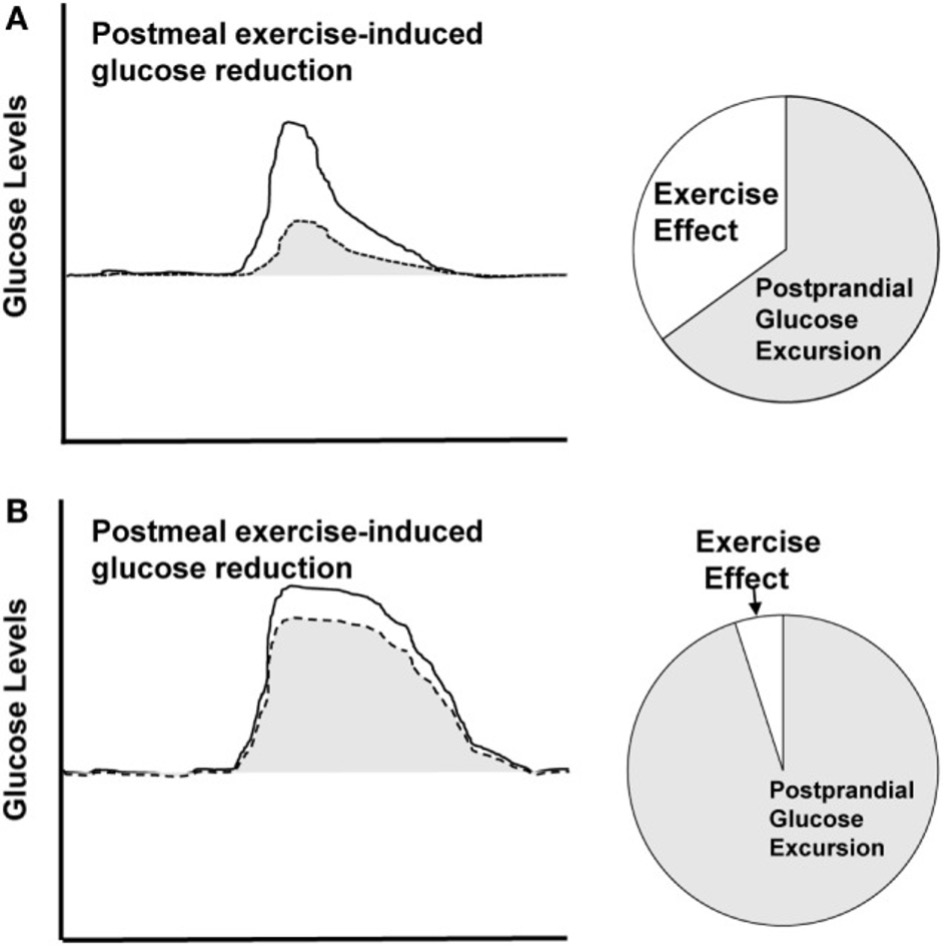
The theoretical rationale for emphasizing exercise when exogenous glucose and insulin levels are highest rest on matching substrate availability with demand and exploiting contraction-mediated glucose uptake. After a meal, rapid gastric emptying and intestinal absorption drive a surge in circulating glucose, accompanied by a rise in endogenous insulin and, in treated diabetes, often superimposed prandial insulin, which collectively enhance glucose delivery to insulin-sensitive tissues but may be insufficient to prevent hyperglycemic peaks in the presence of insulin resistance or impaired b-cell function. Initiating exercise during this period amplifies skeletal muscle glucose clearance via additive insulin-dependent and insulin independent GLUT4 translocation, while simultaneously increasing muscle blood flow, thereby accelerating the disposal of meal-derived glucose and blunting the peak and duration of the glycemic excursion. Timing also appears to be critical: trials suggest that exercise begun immediately or within approximately 15-30 minutes after meal onset can produce greater reductions in postprandial glucose, including lower peak values and reduced 2-hour glucose AUC, than identical exercise performed later or before the meal, likely because the bout directly overlaps with the period of maximal glucose appearance in the circulation. From a preventive and therapeutic standpoint, this synergy between nutrient influx and muscle contraction positions post-meal exercise as a strategically potent, low-barrier intervention to mitigate repetitive glycemic spikes and their downstream cardiometabolic consequences [1,2,3,6,8,9,10].
Evidence From Acute Experimental Studies
Temporal Dynamics and Glycemic Outcomes
A substantial body of acute experimental evidence underscores the critical importance of timing in maximizing the glycemic benefits of postprandial physical activity. Comparative trials have consistently demonstrated that exercise initiated during the early phase of digestion, typically immediately to 30 minutes post-ingestion exerts a superior effect on blunting glucose excursions relative to pre-meal activity or exercise performed later in the postprandial window. For instance, Erickson et al. reported that initiating exercise 30 minutes after the start of a meal resulted in the most pronounced reduction in peak glucose concentrations compared to pre-meal or 1-hour post meal conditions, aligning the peak metabolic demand of skeletal muscle with the peak rate of glucose appearance from the gut. Similarly, recent investigations by Li et al. (2025) highlighted that even a 10-minute walk commencing immediately after glucose intake significantly attenuated the rapid rise in blood glucose levels suggesting that early intervention effectively “intercepts” the glycemic spike before it reaches maximal amplitude. These findings are corroborated by meta-analyses indicating that post-meal timing consistently yields greater reductions in incremental area under the curve (iAUC) for glucose, particularly in individuals with type 2 diabetes where early-phase insulin secretion is compromised [3,8,9,11].
Dose-Response: Minimal Effective Duration and Intensity
Contrary to the traditional focus on sustained, moderate-to-vigorous exercise for metabolic health, acute studies reveal that remarkably brief and low-intensity bouts can deliver meaningful glycemic control. Experimental protocols testing “minimal effective dose” strategies have shown that walking for as little as 10 to 15 minutes at a light to moderate pace significantly lowers postprandial glucose peaks compared to sedentary control conditions. A landmark crossover trial demonstrated that three short, 15-minute post meal walks were more effective at reducing 24-hour glycemic variability than a single continuous 45-minute walk of equivalent intensity performed in the morning or late afternoon. Further supporting the efficacy of low-intensity interventions, recent data indicate that even breaking up prolonged sitting with 2-5 minutes of light walking or standing every 20-30 minutes can acutely lower postprandial glucose and insulin responses. This evidence supports a paradigm shift in clinical recommendations, emphasizing frequency and timing over duration or high intensity, making the intervention highly accessible for patients with physical limitations or low exercise tolerance [5,6,8,10,12,13,14].
Chronic Training Studies and Glycemic Outcomes
Long-Term Glycemic Adaptations to Postprandial Protocols
While acute studies demonstrate immediate reductions in glucose excursions, chronic intervention trials provide compelling evidence that integrating post-meal exercise into daily routines translates into sustained improvements in glycemic control over weeks to months. Longitudinal studies employing continuous glucose monitoring (CGM) have shown that repeating postprandial activity such as three 10-15 minute walks daily after main meals can lead to significant reductions in HbA1c, a key marker of long term glycemic exposure. For example, a randomized crossover trial comparing the efficacy of post dinner walking versus standard care in type 2 diabetes patients revealed not only blunted evening glucose spikes but also a progressive lowering of 24-hour mean glucose levels over the intervention period. Mechanistically, these chronic adaptations are attributed to cumulative improvements in insulin sensitivity, enhanced GLUT4 protein expression, and increased mitochondrial density in skeletal muscle, which collectively facilitate more efficient glucose disposal even in the resting state. Furthermore, consistent engagement in post-meal activity has been linked to reductions in fasting plasma glucose, suggesting that the benefits of targeting the postprandial window extend beyond the acute suppression of meal-induced spikes to improve baseline metabolic homeostasis [1,2,8,10,11].
Broader Cardiometabolic and Psychosocial Benefits
Beyond glycemic parameters, chronic post-meal exercise interventions have demonstrated favourable effects on a range of secondary cardiometabolic and quality of life outcomes. regular participation in low-to-moderate intensity postprandial activity is associated with modest but clinically relevant improvements in body composition, including reductions in visceral adipose tissue and waist circumference, which are independent predictors of insulin resistance. In terms of cardiovascular health, these protocols have been shown to lower systolic blood pressure and improve lipid profiles, particularly by reducing postprandial lipemia, a risk factor often overlooked in fasting lipid panels. Additionally, the manageable nature of short, frequent bouts of exercise often results in higher adherence rates compared to traditional continuous exercise prescriptions, leading to reported improvement in self-efficacy and subjective well-being. Patients frequently report reduced perceived exertion and greater enjoyment with “exercise snacks,” which can positively influence long-term behavioural maintenance and overall quality of life in populations with chronic metabolic disease [1,2,15,16,17].
Modality, Intensity, and Duration Considerations
Comparative Efficacy of Exercise Modalities
The optimal prescription for postprandial glucose control is increasingly understood to depend not just on timing but also on the specific mode of activity, with distinct physiological responses observed across different exercise types. Aerobic exercise, particularly walking, remains the most studied and clinically accessible modality. Direct comparisons indicate that while continuous aerobic sessions (e.g., 45 minutes) provide robust glucose lowering, breaking this volume into shorter, frequent bouts such as 15 minutes after each meal, often yields superior attenuation of 24-hour glycemic excursions in individuals with type 2 diabetes. This “fractionalized” approach appears to better match the episodic nature of nutrient influx. Resistance exercise offers a complementary or alternative strategy; although it may result in a less precipitous immediate drop in blood glucose compared to aerobic activity, it potently enhances insulin sensitivity for a longer duration (up to 24 hours. Resistance “snacks”-brief, intense bouts of bodyweight or band exercises performed post-meal have emerged as a viable option for those unable to perform sustained aerobic work, effectively activating large muscle groups to act as glucose sinks without requiring gym equipment. Comparative studies suggest that while aerobic exercise may be more effective for acute peak blunting, resistance training provides durable benefits for fasting glucose and long-term metabolic flexibility [1,2,4,10].
Dose-Response Relationships and Intensity Thresholds
Establishing the minimal effective dose for postprandial benefit is crucial for clinical adherence. The dose-response relationship for post-meal activity, appears to be non-linear; significant glycemic benefits are observed with low-to-moderate to be non-linear; significant glycemic benefits are observed with low-to moderate intensity efforts, challenging the dogma that higher intensity is always superior. Intensity: Research demonstrates that light-intensity activity (e.g., slow walking) is sufficient to significantly lower post prandial glucose and insulin levels compared to sedentary behaviour, with incremental benefits diminishing at vigorous intensities where counter-regulatory hormone release may paradoxically elevate glucose transiently. Duration and Frequency: A cumulative daily volume of approximately 30-45 minutes, achieved through three 10-15 minute post-meal bouts, has been identified as a “sweet spot” for glycemic management. This frequency ensures that muscle contraction coincides with every major insulin challenge of the day. Notably, even ultra-short “micro-bouts” (e.g., 2-5 minutes of movement every 30 minutes) have been shown to disrupt sedentary physiology and blunt glucose and insulin responses, suggesting that frequency may be a more critical variable than bout duration for regulating postprandial metabolism [4,5,8,10,12,13,14].
Timing Relative to Meal Composition
Interaction of Exercise with Macronutrient Profiles
The efficacy of postprandial exercise is intricately linked to the composition of the preceding meal, with distinct interactions observed between physical activity, carbohydrate load, and macronutrient co-ingestion. Research demonstrates that while post-meal walking (e,g., 30 minutes of moderate intensity) consistently attenuates the glycemic peak across various meal types, its relative impact is. Modulated by the total carbohydrate content. Specifically, exercise appears most effective at suppressing the absolute glucose spike following meals with moderate carbohydrate loads (e.g., 0.75g/kg body weight), whereas meals with very high carbohydrate content (e.g., 1.5 g/kg) may result in a significant “glycemic rebound” post-exercise, likely due to continued absorption of glucose from the gut after the cessation of activity. Furthermore, the co-ingestion of fat and protein significantly alters gastric emptying rates and delays peak glucose appearance. Studies indicate that mixed meals (containing fat, protein, and fiber) produce a flatter, more prolonged glycemic curve compared to isolated carbohydrate sources; consequently the optimal timing window for exercise may need to be extended (e.g., initiating activity 45-60 minutes post-meal) to align muscle contraction with the delayed peak in systemic glucose availability [8,18,19].
Practical Implications for different Meal Contexts
Translating these physiological insights into clinical practice requires tailoring exercise timing to specific meal types. For a high-carbohydrate breakfast (e.g., cereal, toast, fruit). Which typically induces a rapid and sharp glycemic spike, immediate intervention is critical; walking within 10-15 minutes of eating maximizes the “interception” of the glucose surge. Conversely, for a mixed lunch or dinner rich in protein and fat, where the glycemic response is blunted and delayed, a slightly later onset of activity (e.g., 30-45 minutes post-meal) may be more effective and better tolerated. Notably, post-dinner exercise warrants special emphasis; evening meals often induce the most profound hyperglycemia due to circadian reductions in insulin sensitivity, yet studies show that light activity after dinner is particularly potent at lowering nocturnal glucose levels and mitigating the “dawn phenomenon”: immediate light movement for carb-heavy snacks or breakfasts, and a slightly delayed, longer-duration walk following complex, mixed macronutrient dinners [3,8,19,20,21].
Population and Clinical Contexts
Efficacy Across the Metabolic Spectrum: From Prediabetes to Type 2 Diabetes
The clinical utility of postprandial exercise varies significantly across different stage of metabolic dysfunction. In individuals with prediabetes and insulin resistance, where the primary defect is blunted peripheral glucose uptake rather than absolute insulin deficiency, post-meal activity is exceptionally potent. Studies demonstrate that moderate intensity aerobic exercise (e.g., brisk walking) performed after meals can effectively normalize postprandial hyperglycemia, often restoring glucose profiles to near-normoglycemic ranges. For patients with established type 2 diabetes (T2DM), the benefits are even more pronounced relative to standard care. A pivotal randomized crossover trial found that 15 minutes of walking after each main meal resulted in significantly lower 24-hour mean glucose and improved glycemic stability compared to a single 45-minute daily session, highlighting the value of “dose fractionation” in this population. Furthermore, post-meal activity in T2DM patients has been shown to mitigate the “dawn phenomenon” and reduce nocturnal glycemic variability when performed after dinner, directly addressing a challenging aspect of diabetic management [22,23,24,25].
Safety and Specific Considerations for Vulnerable Groups
While generally beneficial, the application of post-meal exercise requires tailored precautions for specific subpopulations.
- Type 1 Diabetes (T1DM): The risk of hypoglycemia is a paramount concern. Exercise increases insulin sensitivity rapidly, and when performed during the peak action of prandial insulin (1-2 hours post-bolus), it can precipitate precipitous drops in blood glucose. Clinical guidelines recommend a proactive reduction in pre-meal rapid-acting insulin (by 30-50%) or the consumption of additional carbohydrates if post-meal activity is planned. However, recent trials suggest that walking immediately after eating (before the insulin peak) may be safer and more effective at blunting the initial spike without causing late-onset hypoglycemia compared to delayed exercise [26,27].
- Older Adults and Comorbidities: In older populations, particularly those with sarcopenia or frailty, short intermittent bouts of post-meal walking (e.g., 10-15 minutes) are often better tolerated than continuous long-duration exercise and have been shown to be equally or more effective for glycemic control. For individuals with cardiovascular comorbidities (e.g., heart failure, stable angina), post-meal exercise reduces the postprandial hemodynamic burden (postprandial hypotension) but should be kept at light-to-moderate intensity to avoid excessive cardiac workload during digestions, where splanchnic blood flow demands are already high [7,28,29,30].
Digital Health and AI-enabled Personalization
Integration of CGM and Wearables for Real-Time Guidance
The convergence of continuous glucose monitoring (CGM) and wearable activity trackers has transformed post-meal exercise from a static recommendation into a dynamic, real-time feedback loop. Modern digital platforms now aggregate disparate data streams like interstitial glucose levels, heart rate, step count, and sleep metrics to visualize the direct cause and effect relationship between behaviour and metabolic response. For patients, seeing a “flattened” glucose curve on a mobile app immediately after a post-prandial walk serves as a powerful behavioural reinforcement, enhancing self-efficacy and adherence. Beyond simple monitoring, advanced algorithms can now alert users to rising glucose trends in real-time (e.g., 20 minutes after a meal) and prompt timely physical activity interventions. This “just in time” adaptative intervention model ensures that exercise is deployed precisely when it is most physiologically impactful, effectively closing the loop between nutrient ingestion and energy expenditure [31,32,33,34,35].
AI-Driven Decision Support and Predictive Modelling
Artificial intelligence (AI) is rapidly advancing the precision of metabolic prescriptions by moving from reactive monitoring to predictive personalization. Machine learning (ML) models trained on vast datasets of individual glycemic responses can now forecast postprandial glucose excursions before they occur, based on meal composition, pre-meal glucose, and recent activity history. These AI-driven decision support systems can generate highly individualized activity “prescriptions” for instance, recommending a specific duration and intensity of walking to counteract a predicted spike from a specific meal choice. Furthermore, “digital twin” technologies and virtual patient simulators allow for in silico testing of different exercise timing strategies, enabling clinicians to optimize time-in-range and reduce glycemic variability more effectively than standard care, particularly when they reduce the burden of constant decision making for the patient [35,36,37,38,39].
Safety, Feasibility, and Adherence
Clinical Safety Framework and Risk Stratification
While postprandial exercise is generally well-tolerated, a systematic safety assessment is essential before implementation in clinical settings. The primary safety concern varies by population: in individuals on insulin or insulin secretagogues, the risk of exercise-induced hypoglycemia necessitates pre-activity glucose monitoring and, in some cases, prophylactic reduction of medication dosing. For patients with underlying cardiovascular disease, postprandial exercise timing must account for the increased metabolic demand during digestion; current guidelines recommend that individuals with unstable angina or acute coronary syndrome delay moderate-to-vigorous intensity activity for at least 2-3 hours post-meal to minimize hemodynamic stress. Conversely, light-intensity walking immediately after eating appears safe and is often recommended in this population to prevent postprandial lipemia and blood pressure swings. Orthopedic limitations, including osteoarthritis, peripheral neuropathy, and balance disorders common in older diabetic populations necessitate activity modification; in such cases, seated upper body resistance “ snacks” or chair-based marching can be substituted for walking while maintaining postprandial glycemic benefits. A simple pre-exercise risk stratification algorithm that evaluates medication use, cardiovascular history, and functional capacity should be employed to determine safe intensity thresholds and whether medical clearance or glucose monitoring is warranted [26,27,28,29,40].
Behavioural and Environmental Barriers to Adherence
Despite the simplicity and efficacy of post meal exercise, sustained adherence remains challenging. Behavioural barriers include lack of habit formation, competing demands on time, and psychological resistance to disrupting meal-related routines or relaxation patterns. Environmental constraints such as workplace culture (limited space for movement post-lunch), weather-dependent outdoor activity, and social stigma of “exercising while others relax” further impede implementation. Studies reveal that adherence to post-meal activity protocols declines precipitously after 3-6 months without supportive structures [41,42].
Evidence-Based Adherence Enhancement Strategies
Several interventions have demonstrated efficacy in improving sustained engagement. micro-bout fractionation (e.g., multiple 5-10 minute activity bouts istributed throughout the day rather than single continuous sessions) significantly improves adherence by reducing perceived barriers and fitting activity into natural breaks in the workday. Wearable technology with real-time feedback and social features (step challenges, shared progress with peers) has been shown to enhance motivation and adherence by 20-30% compared to standard written recommendations. Workplace and institutional interventions such as “walking meeting”, stair-use promotion, or designated quiet movement spaces, normalize post meal activity and reduce social friction. Additionally, integration of activity reminders into the CGM app or smartphone ecosystem increases task completion rates by leveraging existing digital touchpoints the patients already uses. Mobile health platforms that track adherence and provide automated positive reinforcement (e.g., celebrating “50 consecutive post meal walks”) have proven effective for sustaining behavioural change long-term [35,41,42].
Practical Clinical Recommendations
Evidence-Based “Clinical Prescriptions” for Post-Meal Activity
Based on the current evidence landscape, postprandial exercise can be operationalized into clear, tiered “prescriptions” tailored to patient capacity and metabolic goals. The primary recommendation for most individuals with prediabetes or T2DM is a “10-15 minute walk” prescription engaging in light-to-moderate intensity walking (brisk pace, RPE 11-13) starting 15-30 minutes after the completion of each main meal. This protocol has consistently demonstrated superior efficacy in lowering 24-hour mean glucose and HbA1 compared to a single longer daily session. For patients with time constraints or physical limitations, a “micro-bout” strategy serves as an effective alternative: performing 2-3 minutes of light activity (standing, marching in place, or bodyweight squats) every 30 minutes during the postprandial period to disrupt sedentary time and stimulate glucose uptake. Crucially, the intensity should be emphasized as “purposeful but conversational” to ensure safety and long-term adherence without inducing physiological stress [6,8,10,13,14]
Integration into Comprehensive Metabolic Care
Post-meal exercise should not exist in isolation but rather be integrated synergistically with other therapeutic modalities.
- Pharmacotherapy: For patients on insulin or insulin secretagogues, clinicians must coordinate exercise timing with drug pharmacokinetics. “Activity-adjusted dosing” protocols such as reducing pre-meal bolus insulin by 30-50% for planned post-prandial activity are essential to prevent hypoglycemia. Conversely, for those on metformin or GLP-1 receptor agonists, post-meal activity can enhance drug efficacy by improving insulin sensitivity and further blunting postprandial excursions without added hypoglycemia risk [22,26,27].
- Nutrition Counselling: Dietitians should reinforce the exercise prescription by linking it to specific meal types. Patients consuming high-glycemic index meals (e.g., fruit, white rice) should be advised to prioritize immediate post-meal activity to counteract the rapid glucose spike, whereas those on high-fat/ protein diets may be benefit from delayed activity onset [8,20].
- Lifestyle Programs: Incorporating post-meal activity into broader lifestyle interventions (weight management, sleep hygiene) creates a cohesive behavioural framework. “Stacking” the habit, coupling exercise with existing meal routines improves consistency. Furthermore, integrating digital health tools (CGM, wearables) into the care plan allows for remote monitoring and data-driven adjustments to the prescription, fostering a collaborative, patient-centered approach to metabolic health [35].
Research Gaps and Future Directions
Need for Robust, Long-Term, and Inclusive Trials
Despite a growing body of acute crossover studies and short-term interventions, the evidence base for postprandial exercise is still dominated by small samples, brief follow up, and tightly controlled laboratory conditions. Meta-analyses highlight consistent reductions in postprandial glucose AUC and 24-hour mean glucose, but emphasize substantial heterogeneity in protocols, limited representation of women, older adults, and non-White populations, and a paucity of studies powered for clinical endpoints such as incident diabetes or cardiovascular events there is a particular need for large, pragmatic randomized controlled trials that compare different post-meal exercise “strategies” (e.g., micro-bouts vs single daily sessions) over 6-24 months, embedded in real-world environments and integrated with dietary and pharmacologic care, to establish durability, cost-effectiveness, and scalability across healthcare systems. Additionally, cost-effectiveness and scalability across healthcare systems. Additionally most existing work focuses on type 2 diabetes and prediabetes; dedicated trials in type 1 diabetes, gestational diabetes, and high-risk cardiometabolic phenotypes (e.g., NAFLD, PCOS) remain underdeveloped [6,11,26,43,44,45].
Personalization and AI-Guided Protocols as Frontier Areas
Current guidelines largely offer “one-size-fits-all” prescriptions (e.g., 10-15 minutes of walking after meals), yet continuous glucose monitoring and large-scale postprandial response datasets reveal striking interindividual variability in glycemic responses to identical meals and exercise doses. Open questions include: (1) whether timing should be primarily anchored to meal start, peak glucose, or insulin action; (2) how meal composition (fat protein, fiber, glycemic index) should modulate the onset, intensity and duration of activity; and (3) which phenotypic features (insulin resistance pattern, fitness level, chronotype, microbiome) best predict responsiveness to specific postprandial exercise patterns. AI and machine learning models already predict individual postprandial glucose excursions from CGM, dietary, and behavioural data, and early studies suggest these tools can generate personalized dietary and activity recommendations that outperform generic advice. Future research priorities include validating AI-generated post-meal activity prescriptions in randomized trials, defining safe and effective “close-loops” frameworks that combine predicted glycemic responses with real-time wearable inputs, and establishing regulatory and ethical standards for deploying such decision support systems in routine metabolic care [8,20,22,32,34,38,46,47,48,49].
Conclusion
Post meal exercise has emerged as a simple, low-cost, and highly scalable strategy to blunt postprandial glucose excursions across the spectrum of insulin resistance, prediabetes, and type 2 diabetes. Even very modest “doses” of movement such as 10-15 minutes of light to moderate walking or brief resistance “snacks” performed shortly after meals can meaningfully reduce peak glucose levels, lower postprandial glucose area under the curve, and improve 24-hour glycemic profiles, while also conferring broader cardiometabolic and quality of life benefits. Because these protocols are feasible for most individuals, require no equipment, and can be embedded into routine daily activities, they represent an attractive behavioural lever for metabolic health promotion at scale.
Given the accumulating evidence and the growing availability of continuous glucose monitoring, wearables, and AI-enabled decision support, there is a strong rationale for formally incorporating postprandial activity into clinical practice guidelines and structured lifestyle programs. Future care models should models should explicitly prescribe post-meal movement alongside pharmacotherapy and nutrition counselling, and leverage digital platforms to deliver real-time prompts, personalized activity “dosing,” and feedback on glycemic impact. Framing post-meal exercise as a standard component of cardiometabolic prevention and diabetes management rather than an optimal add on, may help reduce the global burden of dysglycemia and align day to day behaviours with precision metabolic care.
Reference
- Chacko E. Exercising Tactically for Taming Postmeal Glucose Surges. Scientifica. 2016;2016:1–10.
- Yang B, Ho Y, Wu D, Qian J. Impact of pre- and post-meal exercise on 24-H glucose profiles in young adults who are overweight and obese. Journal of Exercise Science & Fitness. 2025 Nov 20;24(1):200428–8.
- Hashimoto K, Dora K, Murakami Y, Matsumura T, I Wayan Yuuki, Yang S, et al. Positive impact of a 10-min walk immediately after glucose intake on postprandial glucose levels. Scientific Reports [Internet]. 2025 Jul 2;15(1). Available from: https://www.nature.com/articles/s41598-025-07312-y
- American Diabetes Association. Why Does Exercise Sometimes Raise Blood Glucose | ADA [Internet]. diabetes.org. 2024. Available from: https://diabetes.org/health-wellness/fitness/why-does-exercise-sometimes-raise-blood-sugar
- Iida Y, Takeishi S, Fushimi N, Tanaka K, Mori A, Sato Y. Effect of postprandial moderate-intensity walking for 15-min on glucose homeostasis in type 2 diabetes mellitus patients. Diabetology International. 2020 Apr 3;11(4):383–7.
- Kang J, Fardman BM, Ratamess NA, Faigenbaum AD, Bush JA. Efficacy of Postprandial Exercise in Mitigating Glycemic Responses in Overweight Individuals and Individuals with Obesity and Type 2 Diabetes—A Systematic Review and Meta-Analysis. Nutrients [Internet]. 2023 Oct 23;15(20):4489. Available from: https://www.ncbi.nlm.nih.gov/pmc/articles/PMC10610082/
- DiPietro L, Gribok A, Stevens MS, Hamm LF, Rumpler W. Three 15-min bouts of moderate postmeal walking significantly improves 24-h glycemic control in older people at risk for impaired glucose tolerance. Diabetes Care [Internet]. 2013 Oct 1;36(10):3262–8. Available from: https://www.ncbi.nlm.nih.gov/pubmed/23761134
- Bellini A, Scotto di Palumbo A, Nicolò A, Bazzucchi I, Sacchetti M. Exercise Prescription for Postprandial Glycemic Management. Nutrients [Internet]. 2024 Jan 1;16(8):1170. Available from: https://www.mdpi.com/2072-6643/16/8/1170
- Erickson ML, Jenkins NT, McCully KK. Exercise after You Eat: Hitting the Postprandial Glucose Target. Frontiers in Endocrinology. 2017 Sep 19;8.
- Colberg SR, Zarrabi L, Bennington L, Nakave A, Thomas Somma C, Swain DP, et al. Postprandial walking is better for lowering the glycemic effect of dinner than pre-dinner exercise in type 2 diabetic individuals. Journal of the American Medical Directors Association [Internet]. 2009 Jul 1;10(6):394–7. Available from: https://pubmed.ncbi.nlm.nih.gov/19560716/
- Borror A, Zieff G, Battaglini C, Stoner L. The Effects of Postprandial Exercise on Glucose Control in Individuals with Type 2 Diabetes: A Systematic Review. Sports Medicine. 2018 Feb 2;48(6):1479–91.
- Suntornlohanakul O, Areevut C, Saetung S, Ingsathit A, Rattarasarn C. Glycemic effect of post-meal walking compared to one prandial insulin injection in type 2 diabetic patients treated with basal insulin: A randomized controlled cross-over study. Barengo NC, editor. PLOS ONE. 2020 Apr 1;15(4):e0230554.
- How 2 Minutes of Walking After a Meal Can Help Control Blood Sugar Levels [Internet]. Health. Available from: https://www.health.com/news/walking-after-meal-blood-sugar
- Pugle M. How a 2-Minute Walk After Meals Can Help Lower Type 2 Diabetes Risk [Internet]. Healthline. Healthline Media; 2022. Available from: https://www.healthline.com/health-news/how-a-2-minute-walk-after-meals-can-help-lower-type-2-diabetes-risk
- Hijikata Y. Walking just after a meal seems to be more effective for weight loss than waiting for one hour to walk after a meal. International Journal of General Medicine [Internet]. 2011 Jun;4:447. Available from: https://www.ncbi.nlm.nih.gov/pmc/articles/PMC3119587/
- Tear I. Post-meal exercise and BGLs in type 2 diabetes – Diabetes Qualified [Internet]. Diabetes Qualified. 2024. Available from: https://www.diabetesqualified.com.au/post-meal-exercise-blood-glucose/
- Glucose Control: Why Timing Your Exercise After Meals Matters [Internet]. Cleveland Clinic. Available from: https://health.clevelandclinic.org/exercise-and-your-glucose-levels-does-timing-make-a-difference
- Kim JS, Nam K, Chung SJ. Effect of nutrient composition in a mixed meal on the postprandial glycemic response in healthy people: a preliminary study. Nutrition Research and Practice. 2019;13(2):126.
- Reynolds A, Venn B. The Timing of Activity after Eating Affects the Glycaemic Response of Healthy Adults: A Randomised Controlled Trial. Nutrients. 2018 Nov 13;10(11):1743.
- Gillen JB, Estafanos S, Govette A. Exercise-nutrient interactions for improved postprandial glycemic control and insulin sensitivity. Applied Physiology, Nutrition, and Metabolism. 2021 Aug;46(8):856–65.
- Kaviani M, Chilibeck PD, Yee P, Zello GA. The effect of consuming low- versus high-glycemic index meals after exercise on postprandial blood lipid response following a next-day high-fat meal. Nutrition & Diabetes. 2016 Jul;6(7):e216–6.
- Syeda A, Battillo D, Visaria A, Malin SK. The Importance of Exercise for Glycemic Control in Type 2 Diabetes. American Journal of Medicine Open [Internet]. 2023;9(9):100031. Available from: https://www.sciencedirect.com/science/article/pii/S2667036423000018
- Zhang H, Guo Y, Hua G, Guo C, Gong S, Li M, et al. Exercise training modalities in prediabetes: a systematic review and network meta-analysis. Frontiers in Endocrinology. 2024 Feb 19;15.
- Mousa Khalafi, Saeid Fatolahi, Symonds M, Farnaz Dinizadeh, Rosenkranz S, Alexios Batrakoulis. Comparative Efficacy of Exercise Type on Visceral Adipose Tissue in Patients With Prediabetes and Type 2 Diabetes Mellitus: A Systematic Review With Pairwise and Network Meta‐Analyses. Obesity Reviews. 2025 Oct 8;e70031–1.
- Pahra D, Sharma N, Ghai S, Hajela A, Bhansali S, Bhansali A. Impact of post-meal and one-time daily exercise in patient with type 2 diabetes mellitus: a randomized crossover study. Diabetology & Metabolic Syndrome. 2017 Aug 31;9(1).
- Helleputte S, Stautemas J, Jansseune L, De Backer T, Marlier J, Lapauw B, et al. Glycaemic management around postprandial exercise in people with type 1 diabetes: Challenge accepted. The Journal of Clinical Endocrinology and Metabolism [Internet]. 2024 Feb 8 [cited 2024 May 7];dgae079. Available from: https://pubmed.ncbi.nlm.nih.gov/38330239/
- Yardley JE, Sigal RJ. Exercise Strategies for Hypoglycemia Prevention in Individuals With Type 1 Diabetes. Diabetes Spectrum [Internet]. 2015 Feb;28(1):32–8. Available from: https://spectrum.diabetesjournals.org/content/28/1/32
- Yu HJ, Hong D, Kim K, Heo JH, Cho DH, Hashimoto Y, et al. Optimizing Physical Activity Strategies for Older Adults with Diabetes. Diabetes & Metabolism Journal [Internet]. 2025 Nov 1 [cited 2025 Nov 26];49(6):1178–97. Available from: https://pmc.ncbi.nlm.nih.gov/articles/PMC12620691/
- Keijzer AR de, Kauling RM, Jorstad H, Roos-Hesselink JW. Physical activity for cardiovascular prevention [Internet]. www.escardio.org. 2024. Available from: https://www.escardio.org/Councils/Council-for-Cardiology-Practice-(CCP)/Cardiopractice/physical-activity-for-cardiovascular-prevention
- Belanger MJ, Rao P, Robbins JM. Exercise, Physical Activity, and Cardiometabolic Health. Cardiology in Review. 2022 Apr 2;30(3):134–44.
- Fraser RA, Walker RJ, Campbell JA, Ekwunife O, Egede LE. Integration of artificial intelligence and wearable technology in the management of diabetes and prediabetes. npj Digital Medicine [Internet]. 2025 Nov 18;8(1). Available from: https://www.nature.com/articles/s41746-025-02036-9
- Ji C, Jiang T, Liu L, Zhang J, You L. Continuous glucose monitoring combined with artificial intelligence: redefining the pathway for prediabetes management. Frontiers in Endocrinology. 2025 May 26;16.
- Ersotelos NTh, Margioris AN, Zhang X, Dong F. Review of mobile applications for optimizing the follow-up care of patients with diabetes. Hormones (Athens, Greece) [Internet]. 2018 [cited 2020 Nov 15];17(4):541–50. Available from: https://www.ncbi.nlm.nih.gov/pmc/articles/PMC6294816/
- Contreras I, Vehi J. Artificial Intelligence for Diabetes Management and Decision Support: Literature Review. Journal of Medical Internet Research [Internet]. 2018 May 30;20(5):e10775. Available from: https://www.jmir.org/2018/5/e10775/
- Veluvali A, Dehghani Zahedani A, Hosseinian A, Aghaeepour N, McLaughlin T, Woodward M, et al. Impact of digital health interventions on glycemic control and weight management. npj Digital Medicine [Internet]. 2025 Jan 9 [cited 2025 Jan 25];8(1). Available from: https://www.nature.com/articles/s41746-025-01430-7
- AI-Powered an. WOMEN OF WEARABLES [Internet]. WOMEN OF WEARABLES. 2023 [cited 2025 Dec 8]. Available from: https://www.womenofwearables.com/blogwrite/new-app-from-januaryai-is-an-ai-powered-health-coach-uses-generative-ai-to-predict-blood-sugar-response-to-32mm-foods
- Tyler NS, Mosquera-Lopez CM, Wilson LM, Dodier RH, Branigan DL, Gabo VB, et al. An artificial intelligence decision support system for the management of type 1 diabetes. Nature Metabolism. 2020 Jun 1;2(7):612–9.
- Brügger V, Kowatsch T, Jovanova M. Predicting postprandial glucose excursions to personalize dietary interventions for type-2 diabetes management. PubMed [Internet]. 2025 Jul 17;15(1):25920–0. Available from: https://www.nature.com/articles/s41598-025-08003-4
- Liu K, Li L, Ma Y, Jiang J, Liu Z, Ye Z, et al. Machine Learning Models for Blood Glucose Level Prediction in Patients With Diabetes Mellitus: Systematic Review and Network Meta-Analysis. JMIR medical informatics. 2023 Nov 20;11:e47833–3.
- Younk LM, Mikeladze M, Tate D, Davis SN. Exercise-related hypoglycemia in diabetes mellitus. Expert Review of Endocrinology & Metabolism [Internet]. 2011 Jan;6(1):93–108. Available from: https://www.ncbi.nlm.nih.gov/pmc/articles/PMC3039442/
- Huh U, Tak YJ, Song S, Chung SW, Sung SM, Lee CW, et al. Feedback on Physical Activity Through a Wearable Device Connected to a Mobile Phone App in Patients With Metabolic Syndrome: Pilot Study. JMIR mHealth and uHealth. 2019 Jun 18;7(6):e13381.
- Laffi A, Persiani M, Piras A, Meoni A, Raffi M. Effectiveness of Wearable Technologies in Supporting Physical Activity and Metabolic Health in Adults with Type 2 Diabetes: A Systematic–Narrative Hybrid Review. Healthcare. 2025 Sep 24;13(19):2422.
- Chang Y, Wang H, Zhang X, Liu H. Acute effects of exercise snacks on postprandial glucose and insulin metabolism in adults with obesity: a systematic review and meta-analysis. Frontiers in Nutrition. 2025 Nov 20;12.
- Brian MS, Chaudhry BA, D’Amelio M, Waite EE, Dennett JG, O’Neill DF, et al. Post-meal exercise under ecological conditions improves post-prandial glucose levels but not 24-hour glucose control. Journal of sports sciences [Internet]. 2024 Apr;42(8):728–36. Available from: https://pubmed.ncbi.nlm.nih.gov/38858835/
- Engeroff T, Groneberg DA, Wilke J. After Dinner Rest a While, After Supper Walk a Mile? A Systematic Review with Meta-analysis on the Acute Postprandial Glycemic Response to Exercise Before and After Meal Ingestion in Healthy Subjects and Patients with Impaired Glucose Tolerance. Sports Medicine (Auckland, NZ) [Internet]. 2023 Apr 1;53(4):849–69. Available from: https://pubmed.ncbi.nlm.nih.gov/36715875/
- Armand T, Kintoh Allen Nfor, Kim JI, Kim HC. Applications of Artificial Intelligence, Machine Learning, and Deep Learning in Nutrition: A Systematic Review. Nutrients. 2024 Apr 6;16(7):1073–3.
- Brankovic A, Hendrie GA. Perspectives, challenges and future of artificial intelligence in personalised nutrition research. Proceedings of The Nutrition Society [Internet]. 2025 Aug 4;1–9. Available from: https://resolve.cambridge.org/core/journals/proceedings-of-the-nutrition-society/article/perspectives-challenges-and-future-of-artificial-intelligence-in-personalised-nutrition-research/B5CDFBADAF443312457E822A5863630A
- Agrawal K, Goktas P, Kumar N, Leung MF. Artificial intelligence in personalized nutrition and food manufacturing: a comprehensive review of methods, applications, and future directions. Frontiers in Nutrition. 2025 Jul 23;12.
- Wu X, Oniani D, Shao Z, Arciero P, Sonish Sivarajkumar, Hilsman J, et al. A Scoping Review of Artificial Intelligence for Precision Nutrition. Advances in Nutrition [Internet]. 2025 Feb 1;100398–8. Available from: https://advances.nutrition.org/article/S2161-8313(25)00034-1/fulltext